

Badoo is one of the biggest “meet people” platforms on the planet, and it sits in a unique lane: part dating app, part social discovery tool, part “people nearby” directory. That mix is exactly why Badoo can feel powerful in the right hands—and messy in the wrong ones. Used casually, it becomes a scroll-and-swipe time sink. Used with a system, Badoo can produce fast conversations, real dates, and strong local matches.


This Badoo review breaks down what matters: how it works, which features actually affect results, how pricing and boosts typically operate, what the user base feels like, what safety tools help (and what they don’t), and which alternatives are better depending on the goal.
Overview
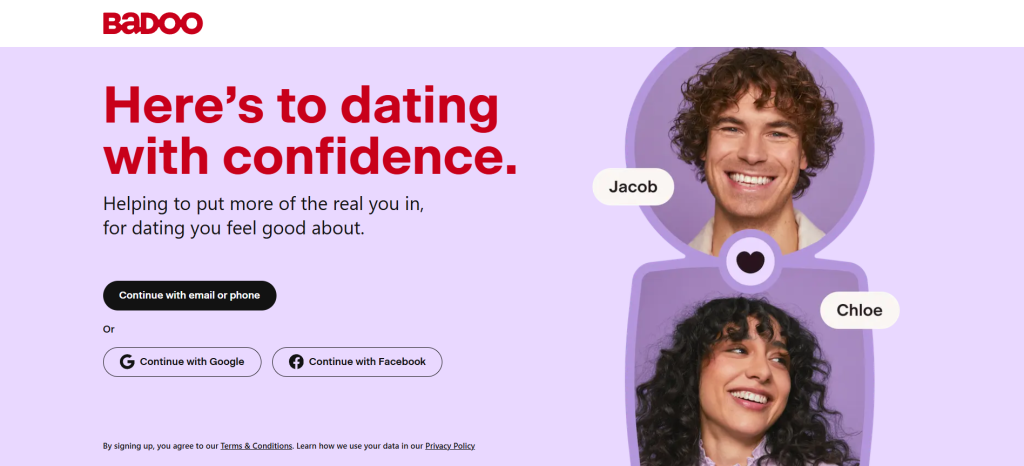
Badoo is a location-driven social and dating app designed to connect people nearby and help users discover potential matches through profiles, swiping, and proximity features. Unlike some dating apps that position themselves as strictly “relationship-first,” Badoo generally attracts a wide range of intent—from casual chat to serious dating—depending heavily on the city and user behavior.
A typical Badoo flow looks like this:
- Create a profile (photos + bio + intent)
- Use “people nearby” discovery or swiping to find matches
- Like, match, and start conversations
- Use verification and video tools to screen quickly
- Move toward a date (or stop if intent doesn’t match)
Badoo tends to work best for:
- People who want a large local pool quickly
- Users who enjoy “people nearby” discovery
- Anyone willing to screen and verify early
- Users who can handle mixed intentions and still stay focused
Badoo can frustrate:
- People who want only serious relationship energy
- Users who dislike swiping and social discovery
- Anyone who gets distracted by endless browsing
- People who don’t want to pay for visibility tools
A useful mental model: Badoo is a high-traffic marketplace. That’s a strength. It also means users need filters, boundaries, and a system.
Features
Badoo has plenty of features, but only a few consistently change outcomes. The features that matter most are visibility, discovery control, verification, and conversation flow.
1) People Nearby discovery
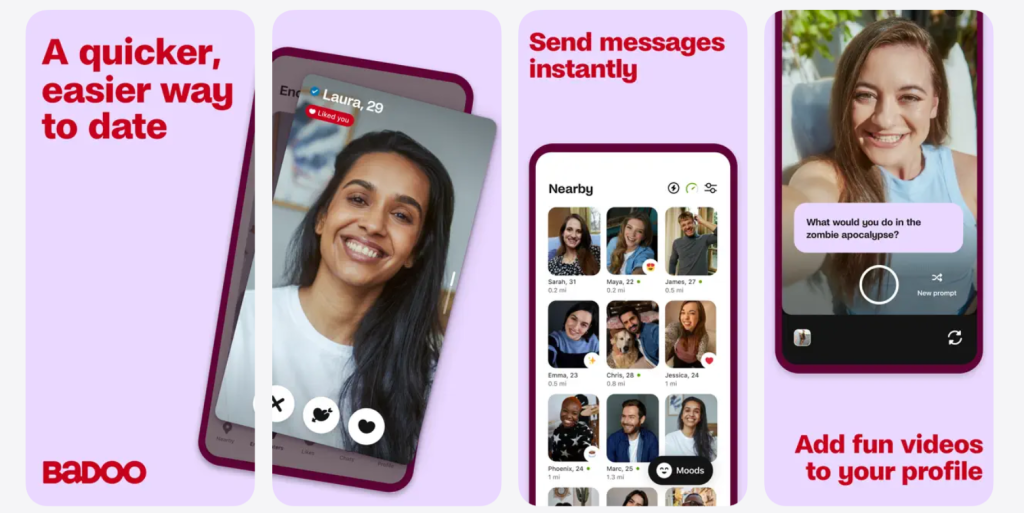
This is the engine. Badoo’s “people nearby” style discovery is built for fast local exploration, which makes it valuable in places where swipe apps feel slow or overly curated.
Actionable takeaway: Users who want fast results should focus on proximity-based discovery, then shortlist profiles that look credible and active.
2) Swiping and matching
Badoo offers a swipe-style experience that’s familiar to anyone who’s used modern dating apps. The difference is the surrounding ecosystem—Badoo often blends swiping with more open browsing.
Actionable takeaway: Use swiping for momentum, but use browsing to target compatibility. Swiping alone tends to produce “random matches” that go nowhere.
3) Profile prompts and bio signals
Badoo profiles can vary from detailed to nearly empty. That matters because low-effort profiles often produce low-effort conversations.
Actionable takeaway: A strong Badoo profile is a filter. Clear photos, a simple bio, and a clear intent statement reduce time-wasting matches.
4) Verification tools
Verification is one of Badoo’s most practical strengths. It helps reduce fake profiles and makes it easier to screen.
Actionable takeaway: Prefer verified profiles when possible. And verify your own profile early—verified users tend to get more trust and better response rates.
5) Video tools and live-style interaction
Badoo has leaned into video tools over time. Video is useful because it compresses trust-building into minutes instead of weeks.
Actionable takeaway: Use video as a screening checkpoint. It prevents catfishing and saves time when intent doesn’t match.
6) Visibility boosters and “spotlight” style features
Badoo often offers paid visibility tools that push profiles to more people. These features can be powerful in big cities—but wasteful without a plan.
Actionable takeaway: Boost only when the profile is strong and the user is actively online to respond quickly. A boost with slow replies is a missed opportunity.
7) Messaging and conversation flow
Messaging is the moment of truth. On Badoo, people often move fast, which means openers must be simple and direct.
Actionable takeaway: Use short, specific openers and ask one easy question. Long essays often get ignored.
Pricing
Badoo typically uses a freemium model: free sign-up, free browsing/matching at a basic level, and paid features for visibility, “who liked you” access, extra likes, and boosts. The exact pricing varies by country, currency, and promotions, so the smartest approach is focusing on when paying makes sense, not memorizing numbers.
Most users will see:
- Free use for core matching and messaging (with limits)
- Paid upgrades that improve visibility and reduce friction
- One-off purchases (boosts/spotlight) and subscription-style options
When paying is worth it (step by step)
Paid features generally make sense when:
- The profile is strong (great photos + clear bio + verification)
- The user lives in a competitive city or wants faster traction
- The user can reply quickly for the next 1–3 hours
- The user has a clear intent and screens matches early
When paying is usually not worth it
Paid tools often feel like a waste when:
- The profile is weak or unverified
- The user isn’t replying consistently
- The user is browsing without intent
- The user expects boosts to create compatibility
Best practice: treat paid features like a megaphone. A megaphone doesn’t fix a bad message.
User Base
Badoo’s user base is large and broad, which is both its biggest advantage and biggest challenge. It typically includes:
- People looking for casual dating
- People looking for serious relationships
- People who want new friends and social discovery
- Travelers and expats
- A mix of high-effort and low-effort users
Because the pool is broad, outcomes depend on how well the user screens.
A fast 20-minute user base test
- Set location and distance intentionally
- Browse 40–60 profiles in the target age range
- Count how many look credible (multiple photos, bio, verification)
- Start 5–10 conversations with the best-fit profiles
- Track response quality within 48 hours
If replies are strong and people follow through, Badoo is likely a good local engine. If replies are low-quality or inconsistent, shift strategy (filters, photos, bio) or test alternatives.
Advantages
Badoo’s strengths are real—especially for local dating and fast discovery.
1) Huge local pools in many areas
In many cities, Badoo’s activity can be higher than smaller “relationship-first” apps.
2) Fast discovery
“People nearby” makes it easy to get traction quickly.
3) Verification and video tools help screening
These features can reduce catfishing and save time.
4) Works well for casual-to-serious depending on intent
Badoo can produce casual dating or serious dating—if the user communicates intent clearly and screens fast.
5) Strong for travelers and expats
Location-driven discovery can help people meeting others in new places.
Disadvantages
Badoo’s size creates predictable downsides.
1) Mixed intent can waste time
Without clear boundaries, it becomes a stream of mismatched conversations.
2) Noise and low-effort profiles exist
Large platforms attract everyone, including people who put in minimal effort.
3) Visibility can feel pay-to-win in competitive areas
Paid boosts can matter in big cities with high competition.
4) More scanning, more screening
Badoo often requires more “filtering work” than smaller niche platforms.
5) Easy to get distracted
The app can become entertainment instead of dating if the user doesn’t set a process.
Safety
Badoo includes safety tools, but the safest users still follow a disciplined system.
Top risks to watch for
- Fake profiles and catfishing
- Money requests and “emergency” stories
- Crypto/investment pitches
- Pressure to move off-platform too fast
- Emotional manipulation and rushed intimacy
A practical Badoo safety system (step by step)
Step 1: Prefer credible, verified profiles
Green flags:
- Verification
- Multiple clear photos
- Consistent details
- Normal conversation tone
Step 2: Screen early with simple questions
Examples:
- What is the person looking for on Badoo?
- How does a typical weekend look?
- What’s the ideal first date?
Real users answer naturally. Scammers often stay vague or push weird topics.
Step 3: Use video as a checkpoint
A short video call can save weeks of time.
Step 4: No-money rule
Never send money to someone met online. Not once.
Step 5: Meet safely
- Public place
- Independent transport
- Tell a friend the plan
- Leave if anything feels off
Alternatives
Badoo is not the only option. The best alternative depends on the goal.
If the goal is relationship-first dating
- Hinge (often better for intentional dating)
- Bumble (stronger intent signaling in some cities)
If the goal is fast casual dating
- Tinder (often similar speed and scale)
If the goal is compatibility prompts and deeper profiles
- Platforms that emphasize prompts and profile depth can outperform Badoo for serious dating, especially if the user values conversation quality.
If the goal is niche dating
- Niche platforms can outperform Badoo when cultural or regional specificity matters.
Simple decision rule:
- Want maximum local volume? Badoo is a strong test.
- Want relationship-first vibes? Hinge or similar may fit better.
- Want niche focus? A niche platform may win faster.
FAQ
1) Is Badoo free to use?
Badoo is typically free to join and use at a basic level, with paid options for visibility and premium tools.
2) Is Badoo a dating app or social app?
Badoo sits in between. It’s widely used for dating, but it also functions as social discovery in many locations.
3) Is Badoo good for serious relationships?
Badoo can work for serious dating, but users must state intent clearly and screen quickly because the platform has mixed intentions.
4) Does Badoo have fake profiles?
Large apps can attract fake profiles. Verification, video screening, and consistent messaging habits reduce risk.
5) What’s the best way to get matches on Badoo?
Use strong photos, verify the profile, write a clear bio, stay active, and message consistently. Visibility tools help only when the profile is already strong.
6) Are boosts worth it on Badoo?
Boosts can be worth it when the user is active and replying quickly, especially in competitive cities. They are less useful with weak profiles or slow replies.
7) What should a first message look like on Badoo?
Short, specific, and human. Mention one profile detail and ask one easy question.
8) How can someone avoid time-wasters on Badoo?
Ask intent early, prefer verified profiles, use video as a checkpoint, and stop conversations that stay vague or inconsistent.
9) Is Badoo better than Tinder?
They serve similar speed and scale in many markets. Badoo’s nearby discovery and verification tools can be advantages depending on location.
10) How fast should someone move off Badoo to WhatsApp?
Moving off-platform can be normal after verification. Pressure to move immediately is a red flag.
11) Is Badoo safe?
Badoo can be used safely with verification, no-money rules, and public meeting habits. Safety depends heavily on user discipline.
12) Why do Badoo matches stop replying?
Common reasons include casual browsing, mismatched intent, weak conversation momentum, or people talking to many matches at once.
13) How should someone write a Badoo bio?
Keep it simple: intent + a few real details + what a good first date looks like. Clarity beats cleverness.
14) Can travelers use Badoo effectively?
Yes. Location-driven discovery can be useful for travelers, but safety rules matter even more when meeting in unfamiliar places.
15) What’s the fastest way to know if Badoo is worth it?
Run a 48-hour test: build a strong profile, start 10 conversations, and measure reply quality and follow-through.
Final Verdict
Badoo is a high-traffic dating and social discovery platform that can produce fast local results when used with structure. It works best when the profile is strong, verified, and clear about intent, and when the user screens early using simple questions and video checkpoints. Without a system, Badoo can feel noisy and time-wasting—especially because intent varies widely. But for users who want a large local pool, quick discovery, and tools that support verification and visibility, Badoo remains a practical, effective option to test—and one that can deliver real dates when used with discipline.