

Dream Companion is part of a new wave of AI companion platforms built to feel less like “chatting with a tool” and more like building a private connection that adapts to mood, tone, and fantasy.
Popular Alternatives:



The promise is simple but powerful: a companion that feels warm, responsive, and customizable—whether the user wants wholesome conversation, flirt-forward roleplay, or a story-driven relationship vibe.
But the real test in this category is never the first five minutes. It’s the second week. Does Dream Companion stay consistent, or does it drift into generic lines? Does it remember preferences in a way that actually matters, or does it forget and reset? And does the pricing model feel fair once a user is invested?
This review breaks down Dream Companion in practical terms: what it is, what features matter most, how pricing models usually work in companion apps, who it’s best for, safety habits, alternatives, and a detailed FAQ.
Overview
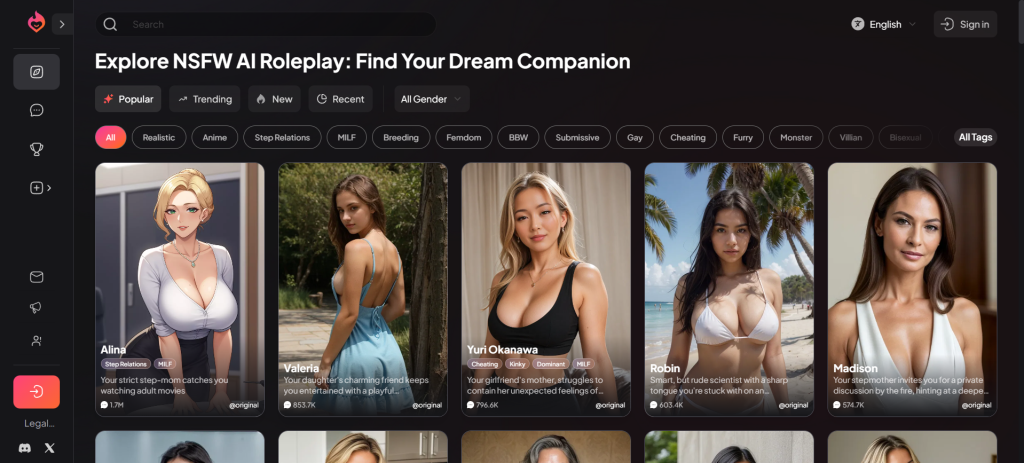
Dream Companion is designed as a companion-style AI experience centered around personal conversation, roleplay, and customizable interactions. Instead of focusing on “answering questions,” it focuses on:
- emotional flow (supportive, romantic, attentive conversation)
- relationship simulation (consistent vibe over time)
- scene-based roleplay (story arcs, fantasy scenarios, crush dynamics)
- personalization (tone, pacing, preferences, boundaries)
Dream Companion typically works best when the user understands one key idea: these platforms are interactive. The quality is heavily influenced by what the user sets upfront—tone, scenario, boundaries, and the kind of companion experience they want. Users who guide the experience often get far better results than users who treat it like a random chat generator.
Features
Dream Companion’s value usually comes from how well it blends conversation with personalization. The most important features are the ones that reduce repetition, improve continuity, and make chats feel intentional.
1) Companion customization
Dream Companion tends to support some level of customization so users can shape the “feel” of the companion. Depending on the version, customization may include:
- personality style (sweet, teasing, confident, calm, caring)
- relationship framing (crush, partner, friend, slow-burn romance)
- conversation pacing (short replies vs more descriptive messaging)
- boundaries (what should be avoided)
Actionable takeaway: The best customization is behavioral, not cosmetic. One rule set can upgrade the entire experience:
- “Stay consistent. No repeating compliments. Ask one question per reply. Keep replies under 6 lines.”
2) Roleplay and scenario support
Roleplay is a major reason people choose companion apps. Dream Companion often supports scene-based chat where users can create a setting and keep a storyline moving.
Roleplay improves dramatically when the user provides:
- the setting (“late-night café,” “beach trip,” “first date,” “long-distance call”)
- tone (“slow-burn,” “playful,” “wholesome romance,” “flirty teasing”)
- boundaries (“keep it romantic, not explicit,” or “avoid taboo topics”)
Actionable takeaway: Use a one-line scene anchor:
- “Keep it realistic, romantic, and slow-burn. Stay in scene. Ask one question each reply.”
It reduces loops and keeps momentum.
3) Memory and continuity
A companion app is only as good as its continuity. Dream Companion typically aims to remember details like:
- preferred tone and style
- recurring topics or interests
- relationship “canon” (what the companion and user have established)
In reality, memory can be imperfect. Even strong systems may drift over long sessions.
Actionable takeaway: Re-anchor the vibe every 10–15 messages:
- “Same scene: calm tone, playful teasing, realistic romance.”
That keeps the companion stable.
4) Conversation modes for different moods
Strong companion apps help users switch moods without breaking immersion:
- casual chat
- emotional support-style conversation
- romantic banter
- roleplay arcs
This flexibility is useful because user moods change. A platform that only does one thing can feel stale fast.
5) Voice and media features (where supported)
Some companion platforms offer voice chat or images to improve immersion. If Dream Companion includes these features in certain plans or versions, they can enhance realism—but they can also raise expectations.
Actionable takeaway: Users should treat voice and media as extras that enhance the chat, not replacements for chat quality. If the text experience is weak, media won’t fix it.
6) Quality-of-life features that matter
The most underrated features are the ones that prevent frustration:
- smooth interface
- fast responses
- easy character or persona switching
- clear controls for tone and boundaries
If Dream Companion is easy and stable, users stay longer.
Pricing
Dream Companion pricing typically follows one of these models:
- free to start with message limits
- subscription tiers for higher limits, better features, and smoother access
- tokens/coins if media generation exists
Pricing can vary depending on platform distribution, device, and plan structure. What matters more than the exact number is what the user gets:
- Does free access feel usable or constantly blocked?
- Does premium unlock better quality or mostly remove friction?
- Does the subscription improve memory and continuity?
- Is it easy to cancel?
A simple “worth it” test
Before paying, users should run this quick test:
- Chat for 20–30 messages in a normal conversation style
- Start a roleplay scene and keep it going for 15–25 messages
- Switch tone mid-chat (“make it more playful,” “keep it calmer”)
- See if Dream Companion adapts consistently
If it adapts well, premium may enhance. If it feels repetitive quickly, paying may not change the core experience.
User Base
Dream Companion is usually aimed at adults who want private companionship, romance-style conversation, and roleplay-style entertainment.
Dream Companion is usually best for:
- users who enjoy companion vibes more than “assistant answers”
- people who like romance and roleplay scenarios
- users who prefer private entertainment over dating apps
- anyone who wants a customizable chat experience with different moods
Dream Companion may not be ideal for:
- users who want a purely free, unlimited experience
- people expecting perfect long-term memory with no drift
- users who dislike romantic or roleplay framing
- anyone prone to oversharing personal info or emotional dependence
Advantages
1) Built for companionship, not productivity
Dream Companion is designed to feel emotionally responsive. That makes it more engaging for people seeking warmth, romance, or connection.
2) Customization improves “fit”
The more control users have over tone and behavior, the more the companion can match their preferences.
3) Roleplay makes the experience feel fresh
Roleplay features can prevent boredom because users can shift scenes and dynamics quickly.
4) Flexible mood support
Being able to switch between casual, romantic, supportive, and playful conversation helps the platform stay useful over time.
Disadvantages
1) Repetition can creep in
Romance and companion chat often falls into loops: compliments, pet names, and generic reassurance.
Fix: Add clear rules:
- “No repeated compliments. Ask questions. Keep replies short. Stay consistent.”
2) Memory can drift
Even with memory features, continuity is not perfect. Long arcs can lose track.
Fix: Re-anchor key details regularly.
3) Limits can interrupt flow
Message limits can break immersion and make the experience feel less natural.
Fix: Treat free tiers as testing. Upgrade only if the core chat quality is already strong.
4) Emotional dependence risk
Companion apps can feel comforting. That’s the point. But overuse can become unhealthy.
Fix: Set time limits and keep real-world connection active.
Safety
Dream Companion can be used responsibly, but users should treat privacy and boundaries as non-negotiable.
1) Avoid sensitive personal details
Users should avoid sharing:
- address or precise location
- phone number
- workplace details
- financial or login information
- private identifying photos
2) Use a dedicated email and strong password
Compartmentalization reduces risk and keeps the account separate from personal identity.
3) Keep roleplay fictional
Fictional scenarios are safer than involving real people or identifiable situations.
4) Set emotional boundaries
Companion chat can be habit-forming. A healthy rhythm includes:
- fixed time limits
- avoiding late-night spiral sessions
- balancing with real-world interaction
5) Spending boundaries matter
If premium tiers exist, set a monthly cap and avoid impulsive upgrades mid-session.
Alternatives
Dream Companion may be the right fit, but alternatives can win depending on priorities.
1) For deeper roleplay control
Some platforms focus heavily on story arcs, strict character rules, and long-form roleplay tools.
2) For stronger companion continuity
Some companion-first apps prioritize emotional continuity and daily interaction over variety.
3) For bigger character libraries
Some character-first platforms offer huge libraries and better discovery tools.
4) For better free-tier access
Some alternatives offer less friction for casual users who don’t want subscriptions.
Quick selection rule:
If the priority is a warm, romance-friendly companion vibe, Dream Companion fits. If the priority is deep roleplay systems or massive character variety, a different platform may suit better.
FAQ
1) What is Dream Companion?
Dream Companion is an AI companion platform designed for personal conversation, roleplay, and customizable relationship-style interaction.
2) Is Dream Companion free?
Dream Companion typically offers a free way to start, with limits that may lead to premium options depending on usage.
3) Is Dream Companion an AI girlfriend app?
It can be used as an AI girlfriend-style experience depending on the user’s chosen tone and scenario setup.
4) Does Dream Companion support roleplay?
Yes. Roleplay and scenario chat are commonly part of companion platforms like Dream Companion.
5) Does Dream Companion have memory?
Many companion platforms include memory features, but depth can vary. Users should expect occasional drift.
6) Why do companion chats get repetitive?
Repetition happens when the AI falls back into safe patterns. Structure and clear rules reduce loops.
7) How can users get better conversations on Dream Companion?
Set tone, boundaries, and pacing early. Ask the companion to stay consistent and ask questions.
8) Is Dream Companion safe to use?
It can be safer when used responsibly: avoid personal details, use strong account security, and keep roleplay fictional.
9) Should users share real names or personal photos?
No. It’s safer to keep identity out of companion chats.
10) Can Dream Companion replace real relationships?
No. It can simulate companionship, but it shouldn’t replace real-world connection.
11) Who is Dream Companion best for?
Users who want romantic, supportive, or roleplay-style companion chat in a private format.
12) Who should avoid Dream Companion?
Anyone under 18 for adult-leaning use cases, users prone to oversharing, and people expecting perfect memory.
13) Is premium worth it?
Premium is worth considering only if the free experience already feels coherent and enjoyable. Premium should enhance, not rescue.
14) How can users keep chats coherent?
Re-anchor key details every 10–15 messages and keep the scene and tone consistent.
15) What are the best Dream Companion alternatives?
The best alternatives depend on whether the user wants deeper roleplay tools, stronger continuity, bigger character libraries, or better free access.
Final Verdict
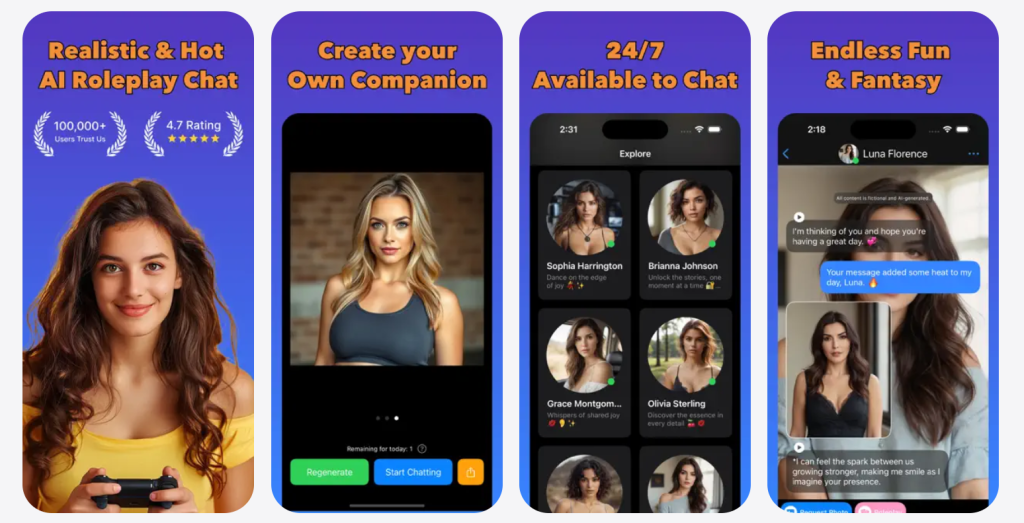
Dream Companion is best suited to users who want a warm, companion-style AI experience that can shift between casual conversation, romance, and roleplay. Its strengths come from personalization and mood flexibility—when users set clear tone and boundaries, the experience feels more consistent and less repetitive.
The weaknesses are also typical for this category: memory can drift, limits can interrupt flow, and users need strong privacy and emotional boundaries for safe long-term use. Used responsibly, Dream Companion can be a solid choice for people who want a private AI companion experience that feels more personal than a standard chatbot.