

Feeld is an open-minded dating app designed for people who want more flexibility, more identity options, and more room to explore relationships outside the narrow limits of mainstream dating platforms. Instead of trying to look like every other swipe app, Feeld positions itself as a space for curiosity, alternative dating, and private exploration, which is exactly why it keeps attracting attention from users who feel underserved by more conventional apps.

That positioning matters. A lot of dating apps still push users toward a familiar script: simple gender categories, conventional matching, and relationship expectations that feel too fixed. Feeld goes the other way. It openly markets itself as a place for open-minded people, supports a wide range of gender identities and sexualities, and frames the app as a safer, more private way to explore dating and relationships.
Last Updated: March 2026
What Is Feeld?
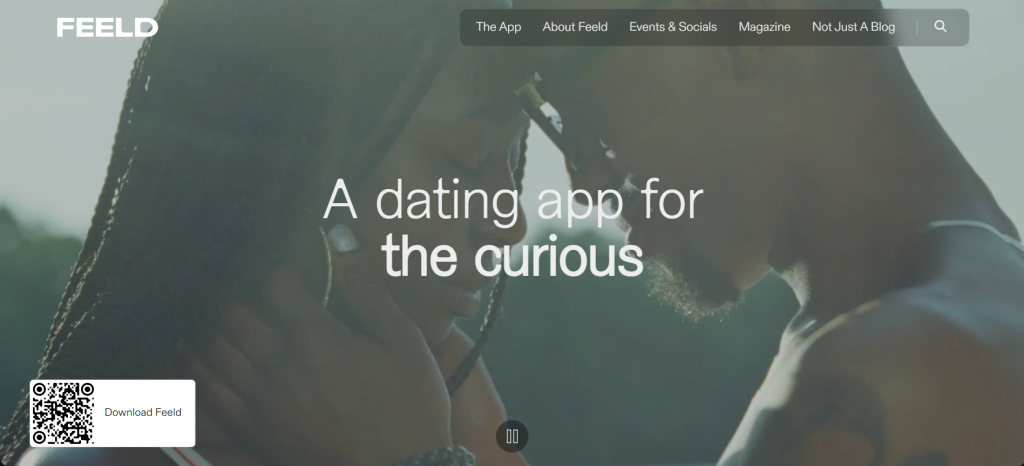
Feeld is a dating app for open-minded adults who want to explore dating, relationships, and connection in a way that feels less conventional than mainstream platforms. Its App Store description says it was made for people looking to explore dating and relationships in a safe and private way, while also describing itself as open to anyone looking for a new kind of dating experience.
That makes Feeld different from broad apps like Tinder or Bumble. It is not trying to be the default dating app for everyone. Instead, it is intentionally shaped around users who may want non-traditional dating, more inclusive identity options, kink-aware spaces, ethically non-monogamous exploration, or simply a more curious and less judgmental environment. This is partly an inference from the app’s positioning, but it is strongly supported by Feeld’s official language around open-minded dating, inclusivity, and exploration.
Feeld also leans into inclusion more directly than many competitors. The App Store description says users can choose from more than 20 gender identities and more than 20 sexualities, which immediately signals that the app is designed for a wider range of people and relationship styles than a typical mainstream dating app.
How This Feeld Review Was Evaluated
• Official positioning as an open-minded dating app focused on exploration, privacy, and inclusive identity options.
• Pricing clarity based on public descriptions of free access and Majestic Membership.
• Safety and privacy signals, including community guidelines and trust-and-safety resources.
• Feature depth, especially identity options, private browsing tools, city exploration, and premium controls.
• Practical value for users seeking alternatives to standard mainstream dating apps.
• Overall usefulness for people who care about openness, privacy, and more flexible relationship discovery.
How Feeld Works
Feeld works like a mobile dating app, but its structure is designed to feel more flexible and less conventional than standard swipe-first platforms. Users create a profile, set their identities and preferences, browse people nearby or in other locations, and connect through likes and chats. The App Store description also notes that users can explore virtual or other locations and connect with like-minded people around the world, which expands the experience beyond purely local discovery.
The app is free to download and use. However, Feeld also offers a paid subscription called Majestic Membership, which unlocks extra features. Feeld’s official Majestic page says this membership gives users more choice and control by allowing them to see who liked them, browse privately, send unlimited likes, and use advanced filters.
That distinction is important. The free version appears usable enough for entry and basic exploration, while Majestic is aimed at users who want stronger privacy, more control, and faster or more filtered discovery. In practical terms, that means Feeld works as a freemium app with an unusually strong privacy angle rather than as a completely locked premium platform.
Another key part of how Feeld works is identity personalization. Since users can choose from many gender identities and sexualities, the app tries to reduce the friction that often happens when people have to squeeze themselves into narrow profile boxes on mainstream apps. That is one of the clearest ways Feeld differentiates itself.
Key Features and Standout Tools
The first standout feature is inclusion. Feeld’s support for over 20 gender identities and over 20 sexualities is not a minor detail. It shapes the entire app experience. For users who have felt boxed in by conventional dating profiles, that kind of flexibility can make the platform feel far more usable and welcoming.
The second big feature is privacy control. Feeld’s trust-and-safety resources and help content highlight tools such as incognito mode, private photos, screenshot protection, nudity detection, and image blurring. These tools matter because the app serves people exploring sensitive or highly personal forms of connection, so privacy is not just a bonus feature here. It is part of the platform’s core value.
Another standout area is Majestic Membership. Feeld’s official membership page says Majestic lets users see who liked them, browse privately, send unlimited likes, and use advanced filters. That gives premium members a notably more controlled experience, especially if they want to be selective, discreet, or more efficient in how they connect.
Feeld also promotes location flexibility. Its App Store description says users can connect with people closest to them or explore more than 20 popular cities around the world. That is a useful feature for travelers, people in smaller local scenes, or users whose interests are more likely to match with broader urban communities.
Is Feeld Safe, Private, or Trustworthy?
Feeld makes privacy and safety a visible part of its public identity. Its official trust-and-safety page says safety and privacy come first and explains that the company builds safety into the experience. Community guidelines also clearly prohibit identity theft, fake images, harassment, abuse, threats, discriminatory behavior, and misconduct.
That is a strong start, especially for an app that serves people exploring sensitive forms of dating and sexuality. Feeld also has publicly visible privacy documentation, with its privacy policy updated on January 5, 2026. The terms and safety pages further confirm that members and non-members can report concerns through in-app functions and support channels.
The privacy tools are particularly notable. Feeld’s help content references incognito mode, private photos, screenshot protection, nudity detection, and image blurring. Those are meaningful features for users who do not want their activity or images casually exposed, especially when exploring more personal or non-mainstream interests.
Still, no dating app is risk-free. Feeld’s own safety materials make it clear that member behavior matters and that reporting tools exist for a reason. Users should still verify identities carefully, avoid oversharing too quickly, and use the app’s privacy features intentionally. In other words, Feeld appears to take safety more seriously than many generic apps, but personal caution is still essential.
Pricing, Payments, and Subscription Structure
Feeld is free to download and use. That point appears clearly in public app listings. However, the platform also offers Majestic Membership, which Feeld describes as an optional paid subscription that funds the app’s development and unlocks extra features.
Public Apple App Store listings in different regions show example in-app purchase prices, though these vary by country and currency. For example, one Apple listing shows Majestic Membership 30 days at €16.99, 90 days at €33.99, a single Ping at €1.59, an Uplift at €5.99, and pack options for Pings. Another regional listing shows Majestic Membership 30 days at ₹599, 90 days at ₹1,199, and 1 year at ₹2,999. These examples show that Feeld’s paid structure goes beyond one flat subscription and includes add-ons like Pings and Uplift. Users should verify current local pricing in their own app store before purchasing.
That pricing structure makes sense for this kind of app. The free version lets users enter the platform and explore. Majestic adds privacy, control, and deeper filtering. Smaller add-ons like Pings and Uplift appear to be designed for more active or intentional users who want extra visibility or direct attention.
The key point is that Feeld does not appear unusable without paying. Instead, the paid layer seems designed to improve the experience rather than replace the free one completely. That balance is often a positive sign in niche dating apps because it allows users to test fit before investing money.
User Experience
Feeld’s user experience is shaped by openness. Even before a user starts matching, the app makes it clear that this is not a conventional dating environment. The branding, identity options, and tone all signal that users are entering a space built for curiosity, flexibility, and non-judgmental connection.
For the right user, that can feel like a major relief. Instead of trying to translate personal identity, alternative relationship preferences, or exploratory dating goals into a system that was not built for them, users can start in a space that already expects variation. That alone can make Feeld feel far more natural than mainstream alternatives. This is partly an inference, but it follows directly from the platform’s feature set and public positioning.
The privacy side of the experience also matters. Tools like incognito mode and private photos suggest that Feeld understands how important discretion can be for its audience. Meanwhile, city exploration tools help broaden discovery beyond immediate local limitations, which can be especially useful for users in smaller communities.
At the same time, Feeld probably will not suit everyone. Users looking for a very conventional dating app or a simple path to mainstream relationship discovery may find the platform too niche, too alternative, or too oriented toward exploration. That does not make it weak. It simply means the app is clearly built for a specific kind of user.
Pros and Cons
Pros
Feeld has a very clear identity and serves users who often feel underserved by mainstream dating apps.
It supports more than 20 gender identities and more than 20 sexualities, which gives users much more flexibility in how they present themselves.
The app offers meaningful privacy features such as incognito mode, private photos, screenshot protection, and image blurring.
Majestic Membership adds useful premium controls like seeing who liked you, unlimited likes, advanced filters, and private browsing.
The app is free to download and use, which lowers the barrier for testing it.
Cons
The platform may feel too niche or too alternative for users who want a conventional mainstream dating experience. This is an inference based on Feeld’s positioning.
Some of the strongest privacy and control tools sit behind Majestic Membership.
Add-ons like Pings and Uplift can make spending feel layered over time.
Because it serves a more specific audience, local match density may vary more than on very large mainstream apps. This is an inference based on niche app dynamics.
Feeld vs Alternatives
Compared with Tinder, Feeld offers less mainstream scale but far more flexibility and inclusivity. Tinder wins on sheer numbers and conventional dating familiarity. Feeld wins on identity options, privacy tools, and a more open-ended approach to connection.
Compared with Bumble or Hinge, Feeld still feels more alternative and more exploratory. Bumble and Hinge can work for many people, but they are not built around the same level of identity customization or the same explicit openness to non-traditional relationship styles. Feeld is.
Against other niche open-minded or kink-aware spaces, Feeld’s main advantage is that it combines broad inclusivity, public visibility, and a relatively mature privacy framework. It does not rely only on edgy branding. It backs that branding with identity flexibility, safety documentation, and premium privacy tools.
Comparison Table: Feeld
| Platform | Best For | Free Version |
Moderation | Key Advantage |
|---|---|---|---|---|
| Feeld | Open-minded adults exploring alternative dating and relationship styles | Free + Majestic upgrade | Privacy tools, profile controls, and reporting features | Inclusive design with flexible identity and relationship options |
| Tinder | Users who want the biggest mainstream dating pool | Free + paid upgrades | Automated moderation and reporting systems | Huge scale and simple onboarding |
| Bumble | Users who want a structured mainstream app | Free + paid upgrades | Platform moderation and community reporting tools | Broad appeal and cleaner mainstream flow |
| Hinge | Users who want more profile depth and prompts | Free + paid upgrades | Profile moderation with reporting and safety checks | More conversation-focused format |
FAQs: Feeld
Is Feeld free to use?
Yes. Public app listings say Feeld is free to download and use, though extra features are available through Majestic Membership.
What is Feeld used for?
Feeld is used for open-minded dating and relationship exploration in a private, inclusive environment.
Who is Feeld for?
It is for adults who want a more flexible dating app experience, especially those interested in alternative relationships, inclusive identity options, and curiosity-driven connection. This is partly an inference from the app’s design and language.
What is Majestic on Feeld?
Majestic is Feeld’s paid membership that unlocks extra features such as seeing who liked you, browsing privately, sending unlimited likes, and using advanced filters.
Does Feeld support different gender identities?
Yes. The App Store description says users can choose from more than 20 gender identities.
Does Feeld support different sexualities?
Yes. The App Store description says users can choose from more than 20 sexualities.
Is Feeld private?
Feeld emphasizes privacy and offers features such as incognito mode, private photos, screenshot protection, nudity detection, and image blurring.
Is Feeld safe?
Feeld has visible safety resources, community guidelines, and reporting options, which are positive trust signals. Still, users should follow normal online dating precautions.
Can users browse other cities on Feeld?
Yes. Public app descriptions say users can explore more than 20 popular cities around the world.
What are Pings on Feeld?
Public App Store listings show Pings as paid add-ons. They appear to be a way to signal interest more directly, though users should verify the exact in-app explanation before purchasing.
What is Uplift on Feeld?
Public App Store listings show Uplift as a paid add-on. Based on the product name and common app logic, it likely boosts visibility, but users should confirm the current in-app explanation before buying. This part is an inference.
Is Feeld better than Tinder?
That depends on the user. Someone wanting a mainstream, high-volume dating app may prefer Tinder, while someone wanting more inclusivity, privacy, and openness may prefer Feeld.
Final Verdict: Feeld
Feeld works because it solves a problem that many mainstream dating apps still do not handle well. A lot of people want more flexibility, more identity space, more privacy, and a more open-minded environment than conventional apps are built to offer. Feeld does not treat those needs like edge cases. It builds around them.
It will not be for everyone. Some users will find it too niche, too exploratory, or too different from the usual dating-app formula. Even so, Feeld’s inclusive identity system, visible trust-and-safety resources, privacy-focused tools, and usable free entry make it one of the more credible options in its category. For users who want dating to feel less rigid and more intentional, the strongest reason to try Feeld is simple: Feeld is built for people who want connection without the usual boxes.