
Raya is a private dating app known for its selective membership model, application-based access, and reputation as a more exclusive space for dating, networking, and friendship. Unlike mainstream apps built around open sign-ups and mass swiping, Raya positions itself as a curated community where access matters almost as much as the matching experience itself. That difference is exactly why the app continues to attract attention.


The appeal is easy to understand. Plenty of dating apps promise better matches, cleaner design, or more serious users. However, Raya adds another layer: exclusivity. Prospective users do not simply download it and start swiping. Instead, they apply, join a queue, and wait for review. That process gives the brand a level of mystique that few dating platforms can match, even if it also creates one of the biggest barriers to entry.
Last Updated: March 2026
What Is Raya?
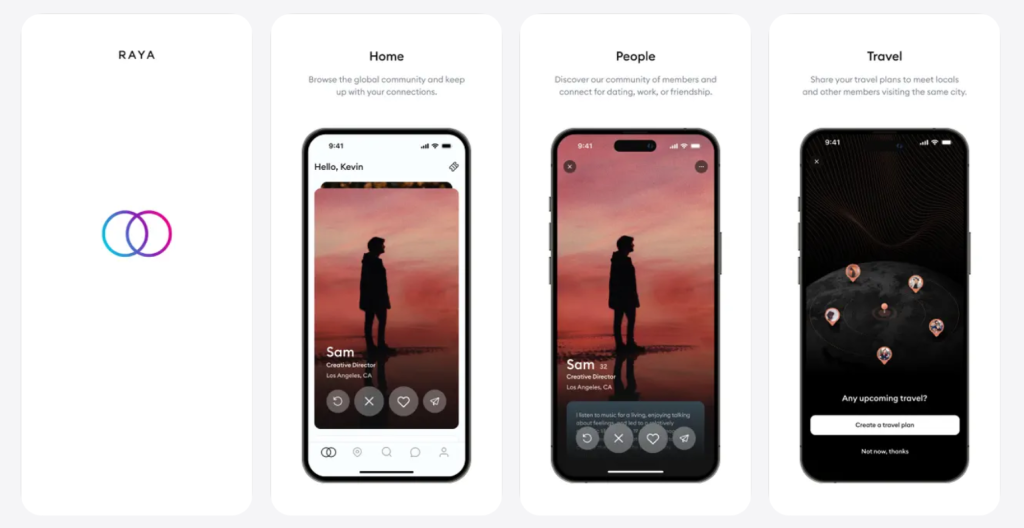
Raya is a private membership-based social app where people connect for dating, networking, and friendship. Official App Store descriptions consistently frame it as a community rather than just a dating product, which is an important distinction. The app is not marketed purely as a romance platform. Instead, it blends relationship discovery with social and professional access, giving it a more lifestyle-driven identity than many standard dating apps.
That positioning shapes how the app is perceived. Mainstream dating apps usually compete on volume, convenience, and speed. Raya competes on scarcity, community fit, and curation. In other words, the brand is selling a filtered social environment, not just a matching tool. For some users, that sounds refreshing. For others, it sounds needlessly gated. Either way, that selective identity is the heart of the product.
The app has also become widely associated with creators, professionals, public figures, and users who want a more polished dating environment. Official copy does not reduce the platform to celebrity dating alone, but the private-community framing clearly supports the idea that Raya wants to feel more carefully screened than the average app.
How This Raya Review Was Evaluated
• Membership structure and how clearly Raya explains its application-based access model
• Pricing transparency, including membership options and visible in-app purchase signals
• Privacy and community-positioning language, especially around trust, respect, and private membership
• Feature depth based on publicly visible App Store details such as Raya+, Direct Requests, Travel Plans, and Skip the Wait options
• Overall usability for users seeking dating, networking, or friendship in a curated environment
• Practical value compared with more open mainstream dating apps and other selective platforms, based on Raya’s own product positioning
How Raya Works
Raya starts with an application, not a standard instant sign-up. Prospective users can download the app and submit an application, after which they are placed in a queue for ongoing review. Official App Store text states that an applicant’s status can move from waitlisted to accepted at any time. That tells users two things immediately: first, access is controlled; second, there is no guaranteed fast path into the platform.
Once accepted, members can choose a paid membership plan. Official listings say members may purchase 1, 6, or 12 month auto-renewing subscriptions, which unlock full functionality while the subscription remains active. So unlike a mainstream freemium app where a user can usually browse before paying, Raya effectively combines gated access with paid participation.
The app’s identity also goes beyond romance. Raya says people use it for dating, networking, and friendship. That broadens the type of interaction users may expect. Some people may join mainly for relationships. Others may be more interested in social access, creative connections, or a curated peer environment. That makes the platform feel more like a members-only social layer than a single-purpose dating tool.
Another notable part of how Raya works is its extra paid options. Public App Store listings in several countries show add-ons and upgrades such as Raya+, Skip the Wait, Direct Requests, Travel Plans, and Extra Likes. Exact pricing varies by region, but those product names reveal how the app monetizes urgency, access, visibility, and discovery. In practice, that means the user experience can become more premium and more layered than what appears in the basic description.
Key Features and Standout Tools
The first standout feature is selectivity. Raya’s application-and-review system is not just an onboarding step. It is part of the brand itself. The waitlist creates a sense of scarcity, and scarcity can make the platform feel more desirable, more controlled, and more status-driven. That may improve perceived quality for some users, although it can also frustrate people who simply want a dating app that works without ceremony.
The second major feature is the multi-purpose social angle. Raya is not presented only as a dating app. Since it explicitly includes networking and friendship, users are joining a broader social ecosystem. That can make the atmosphere feel more dynamic, especially for people who dislike the narrow intensity of apps that revolve only around romantic outcomes. On the other hand, it may also create some ambiguity if a user wants clear relationship intent from every match.
A third standout area is premium layering. Visible purchase options point to a fairly developed monetization structure. Raya+ suggests a higher-tier membership. Direct Requests implies a way to reach people more intentionally. Travel Plans suggests tools for discovery beyond a static home location. Skip the Wait clearly targets users who do not want to sit in the application queue. Each of these features supports the idea that Raya is selling access, reach, and convenience inside a curated environment.
There is also a clear emphasis on community values. App Store descriptions say trust, respect, and privacy are core to the membership experience, and that members who act against these values or guidelines may face suspension or termination. That matters because exclusive dating apps rely heavily on member behavior. The promise is not only better access. It is also better conduct.
Is Raya Safe, Private, or Trustworthy?
Raya leans strongly on privacy and community language. Official descriptions describe it as a private community and say that trust, respect, and privacy are central to the member experience. That does not automatically make the app safer than every alternative, but it does show that privacy is built into the platform’s identity, not buried as an afterthought.
Trust on Raya seems to come from three main signals. First, access is reviewed rather than fully open. Second, membership is paid after acceptance, which may reduce some low-effort behavior common on free mass-market platforms. Third, the platform says community guideline violations can result in suspension or termination. Together, these signals suggest an app that wants tighter control over its environment than the average swipe app.
Still, users should stay realistic. A private brand image is not the same thing as a risk-free experience. Messaging and user-generated content are still part of the app environment, which means normal online dating caution still applies. Users should avoid over-sharing personal details too quickly, verify people carefully, and stay alert even when a platform appears polished. The fact that Raya emphasizes privacy is a positive sign, but it should not be mistaken for perfect protection.
Overall, Raya looks more trustworthy than a random niche app with no clear policies or identity because it has a visible company presence, public app listings, named membership tiers, and a consistent focus on community standards. That does not guarantee a better outcome for every user, but it does give the product a more established feel.
Pricing, Payments, and Subscription Structure
Raya is not a typical free-to-use dating app. Official App Store descriptions say that once accepted, members can choose a 1, 6, or 12 month auto-renewing membership. That immediately tells users to expect a paid-access model rather than a casual free browse experience.
Public App Store listings in different countries also reveal in-app purchase items such as Membership, Raya+ Membership, Skip the Wait, Direct Requests, Extra Likes, and Travel Plans. The exact price points vary by country and currency, which means there is no single universal public number that applies everywhere. However, the recurring pattern is clear: Raya monetizes both base membership and optional upgrades tied to convenience, access, or visibility.
That pricing structure makes Raya feel more premium than most dating apps, but it also raises expectations. Users paying for access usually expect a cleaner experience, better matches, and less spam. If the app delivers that, the cost may feel justified to the right audience. If it does not, the exclusivity can start to look like branding rather than value.
Another point worth noting is the existence of Skip the Wait. Even without over-interpreting it, the name alone tells users that queue friction is significant enough to become monetized. That is smart from a business angle, but users should think carefully about whether paying to move faster into an exclusive app actually improves the odds of finding the right connection.
User Experience
Raya’s user experience is shaped by psychology as much as interface. Before a person ever starts matching, the application step already creates a feeling that the platform is selective and invitation-adjacent. That alone changes expectations. Users do not approach Raya the same way they approach Tinder, Bumble, or Hinge. They approach it with a sense that the platform is filtering for a certain kind of community.
Once inside, the biggest experiential difference appears to be the broader social framing. Because the app supports dating, networking, and friendship, the environment may feel less narrow and more socially layered. For some users, that is a plus. It can reduce pressure and make discovery feel more organic. For others, it may blur intentions in a way that weakens the dating experience.
The premium options also suggest a more flexible but more commercialized experience. Features like Direct Requests and Travel Plans hint at a system designed for users who want more control over who they can reach and where they can browse. That can feel useful, especially for frequent travelers or highly intentional users. Still, it also means the experience may reward users who are willing to keep spending beyond the base membership.
Pros and Cons
Pros
Raya has a strong identity, which makes it stand out in a crowded dating market. It knows what it wants to be, and that clarity can be attractive.
The application-based model may improve perceived community quality by reducing total openness and encouraging more intentional participation.
It is not limited strictly to dating. The networking and friendship angles may add more social value for users who want broader connection opportunities.
Its public messaging around trust, respect, and privacy gives the platform a more premium and controlled feel.
Cons
Access is not immediate. Users must apply and may remain waitlisted for an unknown period.
Membership is paid after acceptance, so the barrier to fully using the app is higher than on mainstream alternatives.
Extra paid layers like Raya+, Skip the Wait, Direct Requests, and other add-ons can make the product feel increasingly expensive.
The blend of dating, networking, and friendship may not suit users who want a purely romance-focused platform.
Raya vs Alternatives
Compared with Tinder, Raya is more selective, less open, and far more identity-driven. Tinder wins on speed, volume, and instant access. Raya wins on curation, status signaling, and private-community positioning. These are very different value propositions, and they attract very different expectations.
Compared with Bumble or Hinge, Raya still feels more exclusive and less mainstream. Bumble and Hinge offer broader accessibility and more predictable onboarding. Raya offers scarcity, gated access, and a more lifestyle-oriented social identity. For someone who wants a polished but open app, Raya may feel too controlled. For someone tired of mass-market swiping, that same control may be the whole appeal.
Compared with other selective apps such as The League, Raya benefits from stronger cultural recognition around exclusivity and creative-social status, at least based on how it presents itself publicly and how its gated model works. Meanwhile, The League and similar apps may feel more explicitly career-filtered or ambition-coded. Raya’s brand seems broader and more image-conscious. This last point is an inference based on product positioning rather than a direct claim from Raya.
Comparison Table: Raya
| Platform | Best For | Free Version |
Moderation | Key Advantage |
|---|---|---|---|---|
| Raya | Users who want a selective, private app for dating, networking, and friendship | Application + paid membership | Application screening with community reporting and profile review | Curated membership model and stronger private-community positioning |
| Tinder | Users who want quick access and the largest pool | Free + paid upgrades | Automated moderation tools with user reporting systems | Huge reach and fast onboarding |
| Bumble | Users who want a mainstream but more structured dating app | Free + paid upgrades | Platform moderation with reporting and community safety tools | Cleaner mainstream experience |
| Hinge | Users who want profile depth and relationship-focused prompts | Free + paid upgrades | Profile moderation with reporting and safety monitoring | More conversation-oriented design |
| The League | Users who want another status-driven selective app | Paid-oriented model | Application review and platform moderation tools | Ambition and selectivity angle |
FAQs: Raya
Is Raya a dating app?
Yes, but not only that. Raya says people use the app for dating, networking, and friendship, so it functions as a broader private social platform rather than a dating-only product.
Is Raya free to use?
Not in the normal sense. Prospective users can download the app and apply, but accepted members must purchase a subscription to get full functionality.
Do users need to apply for Raya?
Yes. Raya’s official App Store description says prospective members submit an application, enter a queue, and are reviewed continually.
Can someone stay waitlisted on Raya?
Yes. Official wording says an applicant’s status can change from waitlisted to accepted at any time, which implies there is no guaranteed acceptance timeline.
What is Raya used for besides dating?
Raya also promotes networking and friendship, which is one of the key ways it differs from many pure dating apps.
Does Raya have monthly membership options?
Yes. Public app descriptions say accepted members may choose 1, 6, or 12 month auto-renewing subscriptions.
What is Raya+?
Public App Store purchase listings show Raya+ as a separate paid membership tier or upgrade. Exact benefits are not fully detailed in the snippets, so users should verify current in-app details directly.
What does Skip the Wait mean on Raya?
App Store purchase listings show Skip the Wait as an available paid item. Based on the name, it appears designed to help users move through the application process faster, though users should confirm the current in-app explanation before purchasing.
Does Raya care about privacy?
Yes. Official app descriptions say trust, respect, and privacy are core community values.
Is Raya worth it?
That depends on what the user values. Someone seeking exclusivity, curated access, and a private-community feel may find it appealing. Someone who wants instant access and a large open pool may not.
Is Raya only for celebrities?
Official descriptions do not say that. They describe Raya as a private community for dating, networking, and friendship, not as a celebrity-only app.
Can users buy extra features on Raya?
Yes. Public App Store listings show add-ons such as Direct Requests, Extra Likes, Travel Plans, and Skip the Wait in some regions.
Final Verdict: Raya
Raya stands out because it sells more than matching. It sells access, curation, and the feeling of being inside a smaller, more filtered social world. That is why the app continues to hold attention even in a crowded dating market. Its private-community identity, application-based entry, and paid membership model create a very different experience from mainstream apps built around speed and scale.
That difference is both its strength and its weakness. For the right user, the exclusivity can feel refreshing, intentional, and higher quality. For the wrong user, it can feel slow, expensive, and overly image-driven. Users who want immediate access, clear affordability, and a huge dating pool may be better off elsewhere. However, users who value curation, privacy language, and a more selective environment may find real appeal in Raya. In the end, the platform works best for people who actively want a gated experience, because that gated experience is exactly what makes Raya feel like Raya.