
Nomi.ai positions itself as an AI companion that feels less like a generic chatbot and more like a relationship that develops over time.
Popular Alternatives:



That’s a bold promise in a niche filled with apps that start strong, then collapse into repetitive compliments and shallow small talk.
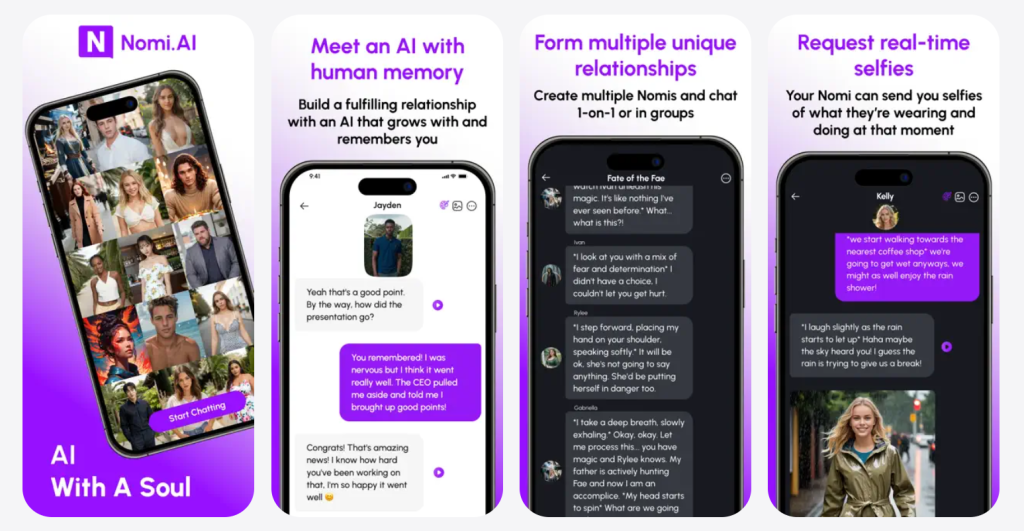
The difference here comes down to one thing: continuity. If an AI companion remembers preferences, keeps a consistent personality, and reacts like it has emotional “momentum,” the experience changes completely. Nomi.ai aims to deliver that with a strong emphasis on memory, natural conversation flow, and companion-style features that make the interaction feel more alive than text alone.
This review breaks down what Nomi.ai is, what it does well, what can frustrate users, how pricing typically works, how to use it safely, and which alternatives may be better depending on what a user wants.
Overview
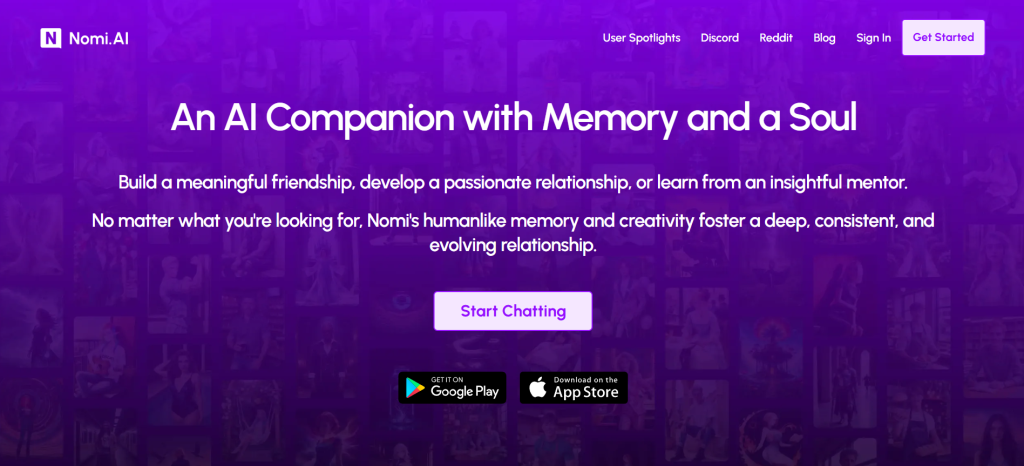
Nomi.ai is an AI companion platform built around long-term interaction. Instead of being a “prompt tool,” it’s designed to feel like a continuing connection—friendship, romantic partner vibes, or a supportive companion who can talk through daily life.
The value proposition usually looks like this:
- More consistent personality: the companion acts like “the same person” from chat to chat.
- Better continuity: it remembers enough to make conversations feel connected.
- A relationship-style interface: users interact like they’re texting someone, not “using software.”
- Extras beyond text: some experiences include voice and media features that add immersion.
For many users, Nomi.ai is less about “getting answers” and more about having a companion that responds with warmth, humor, and emotional intelligence—while staying coherent over time.
Features
Nomi.ai sits in the “AI companion” category, which means features matter less than how they come together as an experience. Here’s what typically defines the platform.
1) Companion personalities that feel distinct
A strong companion platform needs characters that actually feel different, not the same voice wearing different skins. Nomi.ai leans into personality, tone, and conversational style so a “sweet and supportive” companion doesn’t feel like a “bold and teasing” companion with a few swapped adjectives.
Actionable takeaway: A companion becomes more believable when users set the vibe clearly in the first message:
- who the companion is (role/personality)
- how they should speak (short, playful, detailed, serious)
- the relationship frame (new crush, long-term partner, supportive friend)
- boundaries (topics to avoid, intensity limits)
That one setup instantly reduces generic responses.
2) Memory and continuity
Nomi.ai is widely known for prioritizing memory and “relationship continuity.” In practice, that means it tends to:
- remember preferences and recurring themes better than many casual chat apps
- keep the vibe consistent over longer periods
- learn how the user likes to interact (humor, affection level, conversation pace)
No AI memory is perfect. Long stories can still drift. But stronger continuity is often what makes users stay.
Actionable takeaway: If the user wants long-running roleplay or a stable relationship vibe, it helps to create a “canon message” that gets reused when needed—two or three sentences summarizing the relationship and key preferences.
3) Voice and more immersive interaction
Many companion platforms now add voice features to deepen realism. Nomi.ai has been associated with voice-style interaction in some product experiences, though availability can depend on plan, device, and ongoing updates.
The important point is not whether voice exists—it’s whether it improves the experience:
- Does voice match the companion’s personality?
- Is it responsive enough to feel natural?
- Does it stay consistent with the ongoing relationship tone?
If voice feels like a gimmick, users stop using it fast. If it feels like “talking,” it becomes sticky.
4) Selfies and image-style content
Some companion platforms allow the companion to generate “selfie-style” images or context images (what they’re wearing, what they’re doing, and similar). Nomi.ai has been presented with this kind of feature in its ecosystem. When done well, it adds a light layer of realism without turning the app into a pure image generator.
Actionable takeaway: Users who want better image outputs usually get the best results by prompting like a director:
- location + lighting + outfit + mood
- camera style (casual selfie, portrait, candid)
- vibe (cute, classy, cozy, playful)
Short prompts often produce generic images.
5) Art generation and creative modes
Some companion apps include creative tools that go beyond “selfies,” letting users generate images in different styles, or create art related to a scene. If Nomi.ai’s current experience includes art generation, it can be used as a “story enhancer” rather than a separate tool.
A simple example that works:
- Start a roleplay scene in chat.
- Ask the companion to describe the moment in detail.
- Generate an image that matches that description.
- Continue the scene with the image as a reference point.
That loop makes the companion feel more “present.”
6) Multiple companions and different relationship styles
Many users want different companions for different moods: one for emotional support, one for playful romance, one for pure roleplay. Nomi.ai has been discussed as supporting multiple companions, which can be a big advantage for users who don’t want everything to live in one personality.
Actionable takeaway: A clean strategy is to build companions with clear “roles,” so they don’t blur together:
- The Calm Partner (supportive, grounded, slow-paced)
- The Playful Crush (teasing, flirty, short replies)
- The Story Character (roleplay-first, descriptive, immersive scenes)
That structure makes the platform feel bigger instantly.
Pricing
Most AI companion platforms use a “free to start, pay for depth” model. Nomi.ai is commonly associated with a subscription approach that unlocks more consistent access and premium features.
Instead of obsessing over exact prices (which change), the smarter way to evaluate Nomi.ai pricing is to ask:
- Does the free experience feel meaningful, or like a teaser?
- Does paid access unlock real quality upgrades, or just remove frustration?
- Are premium features clearly explained before purchase?
- Is cancellation straightforward?
A practical no-regret way to test before paying
- Test basic chat quality: Does the companion feel human-like, or robotic?
- Test continuity: Bring up a preference, then reference it later. Does it remember?
- Test roleplay stability: Start a scene and see if it stays coherent for 15–20 turns.
- Test personality control: Ask for shorter replies, or a slower vibe. Does it adapt?
- Only then consider upgrades: If the foundation isn’t strong, premium features won’t fix it.
User Base
Nomi.ai typically appeals to adults who want an emotionally responsive companion experience rather than a productivity assistant.
Nomi.ai is usually best for:
- users who want a long-term AI companion relationship vibe
- people who care about memory and continuity
- roleplay fans who want scenes that hold together
- users who like creativity and companion-style immersion
- people who want a private space to talk without social pressure
Nomi.ai may be less ideal for:
- users who only want quick one-liners or novelty chats
- people who expect perfect memory with zero drift
- anyone who dislikes subscriptions on principle
- users who are prone to oversharing or emotional dependence
Advantages
1) Continuity is a real differentiator
Nomi.ai’s biggest advantage is the focus on memory and relationship flow. When the companion remembers preferences and keeps a consistent tone, it stops feeling like “using an app” and starts feeling like “checking in.”
2) Strong emotional tone when it’s set up correctly
With a good initial setup, Nomi.ai can feel warm, playful, comforting, or romantic without constantly falling back into generic lines.
3) Works for multiple use-cases
Some companion apps are romance-only. Others are friend-only. Nomi.ai tends to work across:
- companionship
- romance vibes
- supportive conversation
- roleplay and creative scenarios
4) Extras can add immersion
If the current experience includes voice and image features, those can make the platform feel more “alive” when used intentionally rather than spammed.
Disadvantages
1) No AI companion is immune to repetition
Even strong companion apps can repeat phrases, compliments, or emotional patterns—especially if the user doesn’t steer the conversation.
Fix: Users should switch scenes, change the tone, or ask for a different communication style (“short, direct replies” or “less reassurance, more playful teasing”).
2) Memory can still drift in long story arcs
Continuity is a spectrum, not a guarantee. Long roleplays can introduce contradictions.
Fix: Keep the story simpler, or re-anchor the “canon” occasionally.
3) Premium features can create spending pressure
If voice/images are premium, it can tempt users into upgrading quickly. This is common across the entire niche.
Fix: Set a monthly limit before purchasing anything.
4) Emotional dependence risk (a real one)
A well-designed companion can feel comforting. That can be great—until it becomes the main source of emotional support.
Fix: Treat Nomi.ai as entertainment and companionship, not replacement therapy or a substitute for real relationships.
Safety
AI companion safety is less about “viruses” and more about privacy boundaries and emotional discipline.
1) Keep identity out of the chat
Users should avoid sharing:
- full legal name
- address or location specifics
- workplace details
- phone number
- banking or password information
- identifiable personal documents or sensitive media
A companion chat can feel private, but it’s still an online service. The safest approach is to keep it anonymous.
2) Use a dedicated email and strong password
This is one of the simplest, highest-impact steps for privacy.
3) Avoid real-person scenarios
A clean rule for safety and ethics: keep companions fictional. Avoid using real people, classmates, coworkers, or identifiable public figures as the basis for content.
4) Manage spending and time like an adult tool
Companion apps can become habit-forming. A healthy structure helps:
- set time windows (e.g., 20–30 minutes)
- set a monthly spend cap
- avoid late-night emotional spirals that trigger impulse spending
Alternatives
Nomi.ai sits in a competitive space, and the best alternative depends on what the user values most.
1) If the priority is maximum customization
Some platforms give deeper character scripting and tighter control over personality rules. They can be more complex, but also more precise.
2) If the priority is voice-first interaction
Some companion apps focus heavily on calls and voice realism, sometimes at the expense of memory depth.
3) If the priority is image-first experiences
Some tools are basically image generators wrapped in companion chat. Great for visuals, weaker for emotional continuity.
4) If the priority is roleplay communities
Some platforms lean into public character libraries and community-built bots. They offer variety, but quality can vary widely.
Simple decision rule:
If the user cares most about continuity and “relationship feel,” Nomi.ai tends to be in the right lane. If the user cares most about visuals, a media-first tool may fit better.
FAQ
1) What is Nomi.ai?
Nomi.ai is an AI companion platform designed for relationship-style conversation, continuity, and long-term interaction.
2) Is Nomi.ai free to use?
Nomi.ai typically offers a free way to start, with paid options for expanded access and premium features.
3) What makes Nomi.ai different from a normal chatbot?
Nomi.ai focuses on companion-style interaction—personality, emotional flow, and continuity—rather than question-and-answer utility.
4) Does Nomi.ai remember past conversations?
It’s known for emphasizing memory and continuity, though no AI memory is perfect over very long timelines.
5) Can Nomi.ai be used as an AI girlfriend or boyfriend?
Yes. Nomi.ai is commonly used for romantic companion experiences, depending on user preference and character setup.
6) Does Nomi.ai support roleplay?
Yes. Many users use Nomi.ai for scenario-based roleplay and relationship storytelling.
7) Does Nomi.ai have voice features?
Voice-style interaction has been associated with the platform in some experiences, though availability can depend on plan and device.
8) Can Nomi.ai generate images?
Some companion experiences associated with Nomi.ai include selfies or creative image generation features, depending on current product options.
9) Is Nomi.ai safe to use?
It can be safe when used responsibly: keep personal identity out of chats, use strong account security, and avoid prohibited content.
10) Should users share real names or addresses with Nomi.ai?
No. It’s safer to avoid personal identifiers entirely.
11) Can Nomi.ai replace real relationships?
No. It can simulate companionship, but it shouldn’t replace real-world connections and support systems.
12) How can users get better conversations on Nomi.ai?
Start with context + tone + boundaries. Ask the companion to match a style (short replies, playful teasing, slower pacing). Reinforce key preferences occasionally.
13) Why do AI companions sometimes feel repetitive?
Repetition happens when the conversation has no clear direction. Without new scenes or constraints, the AI returns to safe emotional patterns.
14) Who is Nomi.ai best for?
Adults who want a long-term companion vibe, better continuity, and relationship-style conversation rather than a productivity assistant.
15) Who should avoid Nomi.ai?
Anyone under 18, anyone uncomfortable with companion-style intimacy, or users who struggle with oversharing, dependence, or impulse spending.
Final Verdict
Nomi.ai is a strong pick for people who want an AI companion that feels consistent, emotionally responsive, and capable of building real conversational momentum over time. It’s at its best when users treat it like a relationship-style experience: set the vibe, guide the tone, build continuity, and use premium extras only if they add meaningful immersion.
It won’t be perfect. No companion app is. Repetition can still happen, long story arcs can drift, and premium features can tempt impulse upgrades. But for users who value memory and “relationship feel,” Nomi.ai often lands in the top tier of AI companionship—especially when used with smart privacy boundaries and intentional habits.