
DreamGen is a creative roleplay-and-story platform that can double as an AI girlfriend/AI boyfriend experience when it’s used with romantic scenarios and character-driven chats. It’s built for people who want control, freedom, and long-form storytelling—sometimes emotional, sometimes spicy, sometimes pure fantasy—without the “one perfect soulmate app” framing. The vibe from DreamGen is hybrid: part AI dating playground, part interactive fiction engine, with optional image generation for users who want visuals too.
Last Updated: February 2026
How This DreamGen Review Was Evaluated:
- AI personality realism
- Memory & learning capability
- Customization depth
- Visual generation (if applicable)
- NSFW boundaries
- Pricing transparency
- Mobile experience
- Subscription fairness
What DreamGen Is
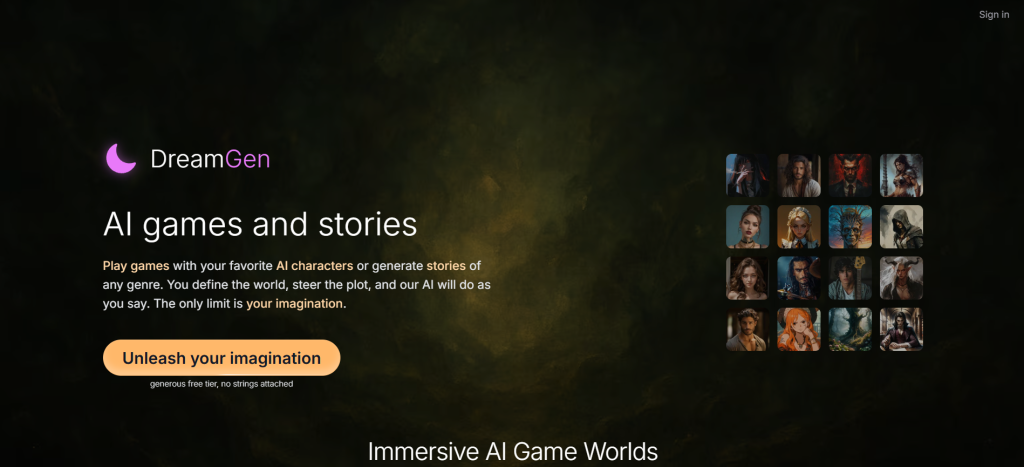
DreamGen is not a traditional “AI girlfriend app” that pushes users into one ongoing relationship thread from day one. The experience is closer to a roleplay studio where characters, scenarios, and writing style matter just as much as the flirting.
It works best for:
- People who enjoy roleplay, character-building, and guided romance
- Users who want fewer “hard stops” when the story turns spicy
- Writers who want a companion that can act, react, and improvise within a scene
It’s not ideal for:
- People who want one consistent partner with a strong emotional arc and daily “relationship progression” features
- Users who prefer a simple app interface over a feature-rich creation environment
- Anyone who dislikes credits-based usage models
Short reality check:
Best at: steerable roleplay, long scenes, and creative freedom.
Not built for: “one soulmate, always on, always consistent” companionship.
How DreamGen Works
The overall process is straightforward, but the results depend on how much direction the user provides. This platform rewards people who like setting the scene.
Step-by-step experience:
- Sign-up
Access typically starts fast, with a free tier available for testing before any payment commitment. - Choose a mode
Roleplay chat and story-writing are the core lanes. Romance can happen in either, but roleplay tends to feel more “alive” for dating-style interactions. - Pick or create a scenario
Scenarios act like the “relationship container.” They set the tone: sweet, romantic, dramatic, jealous, protective, taboo, fantasy, slow-burn—anything. - Create a character (or multiple)
Characters can be made from scratch, adapted from an archetype, or guided with strong personality instructions. - Customize personality and style
The quality improves when the user defines voice, boundaries, pacing, and how the character should behave in conflict or intimacy. - Chat and steer the scene
The best sessions feel like interactive fiction: the user leads, the AI builds, and both shape the flow. - Use memory/context controls
Longer context can help keep scenes coherent and reduce awkward “amnesia” moments in long roleplays. - Optional image generation
Visual generation exists for users who want character looks, scene vibes, or stylized art. - Upgrade or buy credits if needed
Higher tiers typically expand context and raise monthly credit allowances, which matters for heavy roleplayers.
Key Features and Standout Tools
This platform’s strongest advantage is steerability—the feeling that the user can shape the partner, the relationship dynamic, and the story outcomes instead of hoping the AI guesses correctly.
Key strengths that matter for AI dating-style use:
- Scenario-first design
Romance works better when the “world” is defined. A great scenario can make a character feel consistent and emotionally believable. - Character control
More freedom to set tone, boundaries, and personality traits without fighting constant refusal loops. - Long-form scenes
Longer context options can help sustain multi-part conversations, slow-burn romance, or extended roleplay arcs. - Multiple characters and worlds
Useful for love triangles, rivals-to-lovers setups, fantasy parties, or ongoing narrative universes. - Image generation option
For users who want a visual companion layer alongside roleplay and writing.
Short quotable blocks:
Control is the product. The best results come from clear direction, not passive chatting.
It shines in scenes. Romantic tension and roleplay structure are where it feels most natural.
NSFW or Safe for Work?
This is where expectations should be set clearly.
The platform leans toward creative freedom, and it can be used for romance and adult roleplay depending on how the scenario is written and how the user steers the chat. That said, “NSFW” is not just one switch. It’s a combination of:
- The user’s scenario instructions
- The character framing
- The platform’s boundaries and content rules
- Whether image generation is involved and how it’s handled
Practical clarity for readers:
- Romantic content: easy to achieve with the right scenario tone
- Explicit roleplay: possible, but should be treated as adult-only and used responsibly
- Age expectations: adult content should always be restricted to adults, full stop
- Boundaries: users should assume illegal or harmful content is not allowed and should never be requested
Emotional Realism and AI Intelligence
Emotional realism comes down to three things: consistency, memory, and the platform’s ability to stay inside the relationship dynamic without snapping out of character.
Does it feel human?
It can, especially when the user sets a strong voice and the roleplay stays inside a defined scenario. The flirting and tension can feel surprisingly natural when pacing is controlled.
Does it remember past conversations?
Longer sessions tend to hold together better when context limits are generous. For heavy “relationship continuity” over weeks or months, results depend on how the platform handles ongoing memory versus just long context.
Does it adapt?
Yes—within a scene, it can adapt quickly to changes in tone, conflict, affection, or escalation. It’s best when the user treats it like an interactive partner in a story rather than a therapist-style companion.
Scripted or dynamic?
It generally feels dynamic, but it’s still a tool that performs best with direction. Users who want effortless emotional bonding with minimal input may prefer a companionship-first product.
Pricing, Credits & Subscription Model
The business model is credit-based, and it’s fairly easy to understand once the user accepts the core idea: credits fuel AI activity, and bigger plans mainly improve context and monthly usage.
A clear way to think about it:
- Light users can often test and dabble on free access
- Medium users benefit from an entry plan to avoid constantly hitting limits
- Heavy roleplayers and story writers typically need higher tiers because long scenes consume more resources
Typical plan structure (high-level):
- Free tier: meant for testing features and models without committing
- Starter-level paid plan: for casual roleplay and shorter sessions
- Mid and higher tiers: for longer context, smoother long-form roleplay, and more consistent usage without interruptions
Important transparency note for February 2026:
A version transition has been communicated publicly, including a read-only milestone on January 15, 2026, with a shutdown planned for March 2026 for the older version. That matters because it affects anyone who built long stories or relationship threads and wants to keep their data. The safest move is to export anything important and verify which version is currently being used before investing heavily.
Refund clarity and hidden-fee watchlist:
- Subscriptions should be evaluated only after the user tests the free tier
- Credit pack discounts (if offered) matter mostly to heavy users
- Any upgrade should feel like a clear win: more freedom, less interruption, and better continuity
User Experience (Mobile & Desktop)
This is more of a browser-first creative platform than a minimal “tap and chat” mobile app experience.
What feels good:
- Fast entry into roleplay and story sessions
- Strong “creator” feel for scenarios and characters
- Easy experimentation with different relationship dynamics
What can feel annoying:
- Credit limits can interrupt momentum in long romantic scenes
- Heavy creative tools can feel busier than a simple AI companion app
- Image generation adds complexity (and waiting) compared to text-only companionship
Mobile vs desktop:
- Desktop is typically the better environment for long roleplays, story arcs, and detailed scenario creation
- Mobile works for quick chats, light flirting, and scene continuation, but long formatting and editing can feel cramped
Pros and Cons
Pros:
- Strong creative freedom for romance, roleplay, and story-driven dating vibes
- Scenario-based approach makes relationships feel more believable
- Good for long scenes and guided character behavior
- Supports multi-character dynamics and evolving story arcs
- Optional visuals for users who want more than text
Cons:
- Not as “relationship-first” as dedicated companionship apps
- Credit model can break immersion for heavy roleplay users
- Best results require direction and setup effort
- Can feel complex for reminder-based, daily companion use
- Version transitions can create uncertainty for long-term threads if exports aren’t done
Alternatives
The best alternative depends on what the user actually wants: emotional bonding, explicit fantasy, or a balanced hybrid.
If the goal is emotional companionship and daily bonding:
- Replika
- Kindroid
- Nomi
If the goal is NSFW fantasy and direct adult companionship:
- Candy AI
- FantasyGF
- CrushOn
If the goal is hybrid romance with customization and visuals:
- DreamGF
- OurDream
- GirlfriendGPT
Subtle internal-link style callout (strong alternative):
For users who want a softer, more “relationship routine” experience with less setup and more emotional continuity, Kindroid is often a cleaner daily-driver than a scenario-heavy platform.
Comparison Table
| Platform | Best For | Free Version | NSFW Allowed | Visual AI | Key Strength |
|---|---|---|---|---|---|
| DreamGen | Roleplay romance + story arcs | Yes (limited) | Yes (adult-only use) | Yes | Steerable scenarios and long scenes |
| Candy AI | Direct NSFW companion vibe | Limited | Yes | Yes | Fast adult girlfriend framing |
| DreamGF | Hybrid romance + customization | Limited | Yes | Yes | Girlfriend-first setup with visuals |
| Replika | Emotional companionship | Yes (limited) | Limited / varies | Limited | Relationship bonding loop |
| Kindroid | Intelligent companion chats | Limited | Varies | Limited / varies | Strong conversational quality |
| CrushOn | Character roleplay variety | Limited | Often yes | Limited / varies | Flexible character roleplay |
Who DreamGen Is Best For
Lonely users
Best for users who want interactive companionship but prefer it framed as scenes and stories rather than “daily relationship check-ins.”
Fantasy seekers
A strong fit for anyone who wants to design a partner dynamic—protective lover, shy crush, dominant tease, slow-burn soulmate—then play it out in roleplay form.
Emotional companionship
It can deliver warmth, comfort, and romantic bonding, but it’s more “guided fiction partner” than “always-on emotional companion.” Users who want effortless emotional continuity may be happier with Replika-style options.
Casual flirting
Works well for playful flirting and romantic banter, especially when the scenario is light and simple.
Roleplay fans
This is one of the best user types for the platform. It rewards creativity and direction, and it tends to feel more alive the more the user steers.
FAQs on DreamGen
Is there a free version?
A free tier is typically offered to let users test features and models before paying. It’s best used to see whether the platform’s style matches the user’s preferred romance or roleplay pacing.
Does DreamGen send real photos?
No. Any images generated are AI-created visuals, not real photos of a person. If a platform claims “real photos,” that’s a red-flag category and should be treated cautiously.
Can DreamGen replace real dating?
It can’t replace real dating, but it can reduce loneliness and provide a safe space for roleplay, flirting, and practicing communication. It’s best viewed as entertainment and emotional support, not a substitute for human connection.
Is DreamGen anonymous?
It can be used with minimal personal disclosure if the user chooses. The safest approach is to avoid sharing real names, addresses, workplace details, or any sensitive identifiers.
Does DreamGen remember conversations?
Long scenes typically hold together better when context is generous. For long-term “relationship memory,” results depend on how the platform handles persistence, so users should expect some limits and plan accordingly.
Can the personality be customized?
Yes, and that’s one of its main strengths. The best experiences come from clearly defined traits, boundaries, and relationship dynamics inside a scenario.
Is DreamGen safe?
It can be safe when used responsibly: avoid sensitive information, keep adult content adult-only, and treat chats like content that could be stored. Users should also watch subscriptions and billing terms carefully.
Is DreamGen good for emotional companionship?
It can be, especially for romantic scenes and comforting chats. People who want a stable “daily companion” with a simple app feel may prefer companionship-first alternatives.
Is DreamGen good for NSFW roleplay?
It can be used that way, but adult content should be restricted to adults and used responsibly. It’s also wise to keep expectations realistic around how different prompts and boundaries affect responses.
Does DreamGen work well on mobile?
Mobile works for continuing chats and light scenes. For long story arcs and detailed scenario creation, desktop usually feels smoother and more comfortable.
Are there hidden fees on DreamGen?
The model is typically transparent once the user understands credits and monthly allowances. The main surprise risk is upgrading before the user knows how fast credits can be consumed in long scenes.
Can users delete their data?
That depends on account controls and how content is stored. The safest assumption is that users should only type what they’d be comfortable having saved, and they should use export/delete controls when available.
What about version changes and older content?
If a platform announces read-only dates or shutdown timelines for older versions, users should export important stories and verify which version they’re using. Waiting too long can risk losing long-running threads.
What’s the best alternative for beginners?
For beginners who want romance with less setup, Kindroid is often easier to get consistent results quickly. For users who want a more “girlfriend app” vibe, DreamGF-style platforms feel more direct.
Final Verdict on DreamGen
DreamGen is a strong pick for users who want a steerable AI romance and roleplay experience that can shift from sweet companionship to intense fantasy scenes without constantly breaking immersion. It’s not the simplest “daily partner app,” and the credit model means heavy users should plan their usage, but the payoff is control, flexibility, and long-form scenes that feel genuinely engaging when the setup is done right. For readers who want less creative setup and more effortless emotional continuity, Kindroid is usually the better first choice—otherwise DreamGen is an excellent fit for roleplay-forward dating experiences and story-driven virtual relationships.