
LOVOO is a dating app built around meeting new people through matching, chat, location-led discovery, and live interaction. In plain terms, it sits in the middle of modern dating apps and social discovery platforms: it is not just for swiping, but also for chatting, exploring nearby profiles, and using interactive features that make the first conversation easier.


For readers comparing dating apps, that positioning matters. Some apps focus almost entirely on static profiles and slow messaging. LOVOO tries to make the experience feel more active. It pushes discovery, personality-led contact, and multiple ways to start a conversation. That makes it appealing to people who want more than a simple swipe loop, but it also means the app can feel busier and more layered than ultra-minimal competitors.
Last Updated: February 2026
What Is LOVOO?
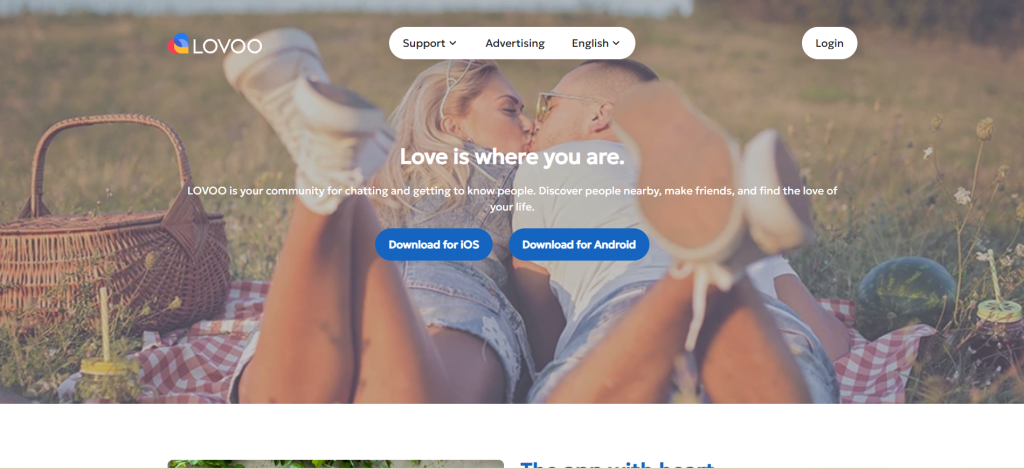
LOVOO is a dating and chat platform designed to help users meet singles, make friends, and start conversations through more than one route. The platform combines profile browsing, matching, direct outreach, location-aware discovery, and live social features. That gives it a broader toolkit than a basic swipe-only app.
What makes it stand out is that LOVOO does not feel like a single-mode app. It presents several ways to connect: traditional match-based chatting, nearby discovery, live streaming, speed-date style interactions, and Blind Date-style features that can initially hide appearance so personality and conversation matter first. That mix can suit users who want variety, but it can also create a learning curve for anyone expecting a simple, stripped-back dating interface.
In category terms, LOVOO is best understood as a hybrid dating app. It is clearly a dating product, but it borrows enough social and live-interaction mechanics to feel more dynamic than many classic matchmaking apps.
How This LOVOO Review Was Evaluated:
- Feature depth and variety of ways to connect
- Ease of sign-up, navigation, and daily usability
- Pricing clarity and how paid features affect the experience
- Privacy, reporting tools, and trust signals
- Flexibility across mobile-first dating habits
- Practical value compared with mainstream alternatives
- Whether the app feels useful for actual conversations, not just profile browsing
This review looks at LOVOO’s positioning, feature structure, pricing model, usability, and trust signals to assess where it feels strong, where it feels layered, and where users should be cautious before paying.
How LOVOO Works
At a basic level, LOVOO works like a modern dating app: a user creates a profile, browses people, interacts through likes or matches, and starts chats. That is the core loop. But the platform adds extra contact routes that change how conversations begin. Most notably, its icebreaker-style feature allows users to contact new people without first getting a match, which lowers friction and gives more proactive users another way to start.
The app also leans into daily recommendations. Instead of relying only on endless browsing, it tries to suggest people a user may have things in common with. That can make the experience feel more guided and less random.
Then there is the location and live layer. LOVOO includes nearby discovery and more interactive features, which means a user is not limited to liking profiles in a feed. They may also encounter people through live experiences, more immediate interactions, or local discovery tools. For users who dislike slow-moving apps, that can be a meaningful advantage.
A simple way to think about it: LOVOO is designed to offer multiple on-ramps to the same goal. A user can swipe, send a direct opener, explore nearby options, or use more interactive features. That variety is useful when one method starts to feel stale.
Key Features and Standout Tools
The first standout feature is Icebreakers. This matters because many dating apps lock first contact behind mutual interest. If a user prefers taking initiative, that can make the platform feel more flexible.
The second strong point is daily recommendations. LOVOO tries to reduce decision fatigue by surfacing potential matches instead of forcing users to do all the filtering themselves. That can help the app feel more active and less exhausting.
The third is live interaction. LOVOO is not just built around passive profile browsing. It includes more interactive ways to connect, which can make the platform feel more social and energetic than a basic match-and-message app.
The fourth is location-led discovery. Nearby discovery tools can make local dating feel more practical because the app is not only showing abstract profiles. It pushes the idea of meeting people who are realistically within reach.
Finally, there is the credits and premium layer. LOVOO appears to use both subscription-style upgrades and in-app purchases, which gives users flexibility but also makes the app feel more monetized than platforms with just one simple premium option.
Is LOVOO Private, Safe, Reliable, or Trustworthy?
LOVOO presents itself as a platform that takes safety seriously. It includes reporting tools and moderation systems, which is important in a dating environment where fake profiles, spam, and bad behavior are common concerns.
That said, no dating platform should be treated as completely risk-free. A strong safety setup is helpful, but it is not the same as a guarantee. The practical view is simple: users should still use normal dating-app caution, avoid oversharing too quickly, and verify people before moving conversations offline.
On privacy, LOVOO functions like many mainstream dating apps, meaning users should assume personal data, usage patterns, and possibly location-related information may be involved in the experience. Privacy-conscious users should review the latest in-app disclosures before using every feature extensively.
So is it trustworthy? Generally, yes, in the sense that it appears to be an established and structured platform rather than something random or obscure. But trust should still be practical, not blind. The smartest approach is to use the platform with normal online dating caution.
Pricing, Payments, and Subscription Structure
LOVOO can be downloaded and used for free. That makes it accessible for new users who want to test the app before spending money. But like many dating platforms, the full experience is shaped by paid upgrades.
One important thing to understand is that LOVOO appears to use two monetization tracks. The first is a Premium subscription model. The second is credits, which work like an in-app currency for extra functions. This matters because some users expect one simple paywall, while LOVOO feels more layered.
This structure can be good for users who like flexibility. Some may prefer a subscription. Others may want to pay only for specific extra actions. But it can also feel heavy if someone prefers a cleaner, more straightforward pricing model.
Because app pricing can vary by country, device, promotion, and payment method, users should always verify the exact current cost inside the app before subscribing. That is especially important with dating apps, where pricing and feature access can shift over time.
Another practical caution: deleting a profile does not automatically mean a paid plan is canceled. Users should always check their subscription settings directly and manage cancellation properly if they choose to stop.
User Experience (Mobile, Desktop, Sign-Up, Setup, Ease of Use, etc.)
LOVOO is clearly designed as a mobile-first dating app. That suits the way most people use dating platforms today, but it also means the experience is best understood as a phone-centered product rather than a desktop-first service.
From a usability perspective, LOVOO balances familiar dating mechanics with extra layers. Matching and chat are easy to understand. Icebreakers make first contact easier. Recommendations help reduce browsing fatigue. But the app also adds live-style tools, nearby discovery, and extra paid layers. That can be exciting for engaged users, yet slightly overwhelming for people who want a minimalist experience.
The upside is that the platform offers multiple ways to avoid the dead-end feeling that happens on static dating apps. If regular matching feels slow, a user can try a direct opener. If chat feels flat, the more interactive features may help. If browsing feels repetitive, recommendations may make the experience feel more curated.
The trade-off is complexity. More modes can mean more decisions, more upgrade prompts, and a busier interface. For some users, that adds fun. For others, it adds friction. LOVOO tends to suit people who enjoy exploring features rather than those who want the fastest possible path from swipe to chat.
Pros and Cons
Pros
- Free version is available, so users can test the app before paying
- More than one way to start conversations
- Interactive features make it feel more dynamic than basic swipe-only apps
- Nearby discovery can make local dating feel more practical
- A broader feature set gives users more flexibility
Cons
- The monetization model feels more layered than simpler dating apps
- Exact pricing can vary, so users need to verify current costs directly
- Privacy-conscious users may find the data side worth examining carefully
- More features can also make the app feel busier and less streamlined
- Subscription management requires attention if a user chooses to cancel
LOVOO vs Alternatives
LOVOO competes best when the user wants a dating app that feels more alive than a plain swipe grid. Compared with simple match-only platforms, it offers more ways to break the ice and more room for spontaneous interaction. That makes it attractive to users who enjoy variety and social energy.
Against more streamlined apps, however, LOVOO can feel less clean. Some competitors win by doing fewer things but doing them in a more direct way. If the goal is a calm, minimalist experience with fewer upgrade layers, a simpler platform may feel easier to use.
Where LOVOO may hold an edge is in first-contact flexibility. Icebreakers, interactive features, and guided discovery create more chances to start a conversation. If the problem is too many matches that never become real chats, LOVOO can feel more action-oriented. If the problem is too much going on, another app may be a better fit.
Comparison Table: LOVOO vs Other Platforms
| Platform | Best For | Pricing / Free Version |
Key Advantage | Main Drawback |
|---|---|---|---|---|
| LOVOO | Users who want multiple ways to connect | Free to start; paid Premium and credits available | Icebreakers, interactive features, and varied discovery modes | More layered monetization and a busier feature set |
| Tinder | Fast, mainstream swiping | Free version with paid upgrades | Huge familiarity and simple entry point | Can feel repetitive and crowded |
| Bumble | Users who prefer more structured initiation | Free version with paid upgrades | More guided conversation dynamics | Can feel limited if local activity is low |
| Badoo | Social discovery plus dating | Free version with paid upgrades | Broad audience and casual social feel | Can feel broad rather than focused |
| Hinge | Users seeking more profile depth | Free version with paid upgrades | More conversation-oriented profiles | Less playful if users want faster, lighter interaction |
The table above places LOVOO in the feature-rich hybrid lane. It tends to suit users who want more ways to start something, not just more profiles to scroll through. LOVOO’s strongest contrast is against ultra-simple apps: it gives more tools, but it asks for more attention too.
FAQs: LOVOO
Is LOVOO free to use?
Yes, LOVOO can be used for free, but it also offers paid upgrades and extra paid features.
Does LOVOO require a match before messaging?
Not always. One of its main appeals is that it offers ways to start contact more directly than traditional match-only apps.
What is LOVOO Premium?
LOVOO Premium is the subscription-style upgrade layer that unlocks additional benefits and broader access.
What are LOVOO credits?
Credits are an extra in-app purchase system used for certain actions or add-ons beyond the standard free experience.
Does LOVOO have live or interactive features?
Yes. LOVOO is more interactive than a basic swipe-only dating app and includes features designed to make the experience feel more dynamic.
Can LOVOO help users find people nearby?
Yes. Nearby discovery is part of what makes the app feel more practical for local dating.
Is LOVOO safe?
It appears to include reporting and moderation tools, but users should still use normal dating-app caution.
Does LOVOO collect user data?
Like most modern dating apps, users should assume some personal and usage-related data is involved and review the latest privacy details in-app.
Is LOVOO good for serious dating?
It can be, but it is better described as a flexible dating-and-social platform rather than a purely serious matchmaking app.
Does LOVOO work better on mobile or desktop?
It is best understood as a mobile-first app.
Who is LOVOO best for?
It is best for users who want more than simple swiping and prefer multiple ways to start conversations.
Is LOVOO better than Tinder?
That depends on preference. LOVOO offers more feature variety, while Tinder is generally simpler and more direct.
Is LOVOO easy to use for beginners?
Mostly yes, but beginners may need a little time to get used to the extra features and paid layers.
Can users pay only for extras instead of subscribing?
In many cases, the app’s credit system makes that possible, which may appeal to users who do not want a full subscription.
Should users verify pricing before paying?
Yes. Dating app pricing can change, so it is always smart to check the exact current amount in the app before purchasing.
Final Verdict: LOVOO
LOVOO is a solid option for users who want a dating app that feels more active, layered, and socially dynamic than the average swipe-only platform. Its strongest strengths are variety and momentum: it gives users more than one way to start conversations, more than one way to discover people, and a more interactive feel than many simpler rivals.
The biggest caution is that LOVOO is not the cleanest or simplest app in the category. Between Premium, credits, and multiple feature modes, it asks users to navigate more moving parts than some competitors. That does not make it bad. It just means the app fits users who enjoy feature depth more than users who want an ultra-minimal dating flow.
LOVOO stands out as a feature-rich dating app that offers more than basic swiping. Its mix of direct openers, interactive tools, and location-based discovery gives it a more active feel than many simpler rivals. While the layered pricing model may not suit everyone, the overall platform can still be a strong option for users who want flexibility, variety, and a more dynamic dating experience. For that reason, LOVOO remains a competitive choice in the modern dating app space.