
Inner Circle is a curated dating app built for people who want a more selective, lifestyle-focused approach to online dating. Instead of positioning itself as a mass-market swipe app for everyone, it presents itself as a more filtered community for singles who value ambition, compatibility, and a certain level of profile quality. That difference is the core of its appeal. It is not trying to be the biggest dating app in the room. It is trying to feel more exclusive.
That makes the platform stand out immediately. Many dating apps focus on volume, speed, and endless profile turnover. Inner Circle leans in the opposite direction. It frames itself around curation, access, and a more intentional dating environment. For some users, that sounds refreshing. For others, it can feel restrictive or overly branded around status. Either way, the concept is clear: this is meant to feel more like a members-only dating space than a casual open-door app.
Last Updated: February 2026
What Is Inner Circle?
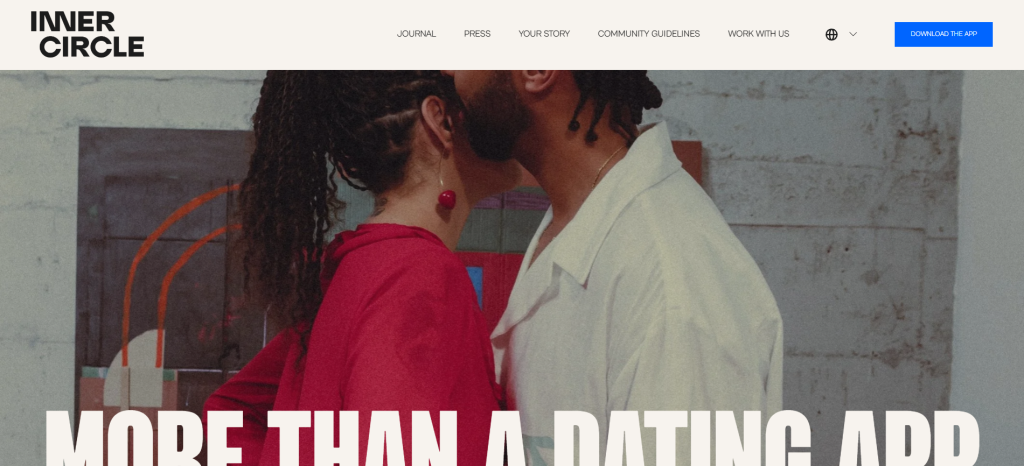
Inner Circle is a dating app and social-style dating community built around the idea of quality over quantity. In simple terms, it is designed for singles who want to meet people they see as ambitious, driven, interesting, and more aligned with their own lifestyle.
What separates it from a typical dating app is the selective image it promotes. The platform is known for presenting itself as more curated than broad, mainstream options. That does not mean every profile will automatically be perfect, but it does mean the service tries to distinguish itself through brand positioning and a more filtered community feel.
It is best understood as a premium-leaning dating platform rather than a casual, open-access dating app. Even when used for free, the service is built around the idea that access, features, and visibility become stronger through paid membership and participation in a more selective ecosystem.
How This Inner Circle Review Was Evaluated:
- Overall clarity of the app’s dating concept and target audience
- Ease of sign-up, approval flow, and daily use
- Pricing structure and how much the paid tier changes the experience
- Practical value for people seeking more intentional dating
- Privacy, trust signals, and moderation expectations
- Mobile usability and general user experience
- How well the platform stands up against mainstream alternatives
This review focuses on how Inner Circle positions itself, how the app likely feels in real use, what kind of dater it suits best, and where its biggest strengths and limitations show up in practice.
How Inner Circle Works
At its core, Inner Circle works like a modern dating app: users create a profile, add photos and personal details, browse other members, show interest, and start conversations. That part is familiar.
What changes the experience is the selective layer. Inner Circle is known for presenting itself as a curated community, which means the sign-up experience may feel a little more filtered than on mass-market competitors. The app’s brand identity is built around the idea that not everyone is automatically part of the intended community, and that helps reinforce its premium image.
In practice, that creates a different emotional tone from the start. Instead of simply joining and swiping through a massive pool, users are stepping into a platform that is trying to present a more refined dating atmosphere. That can make the app feel more intentional, but it can also make it seem less immediate than fully open dating apps.
The platform is also built around the usual dating mechanics of matching and chatting, but the real value proposition is not the basic functionality. It is the environment. Inner Circle is selling the idea that the people inside the app are there for a more serious or more selective type of dating experience.
That is an important distinction. Users are not just choosing a feature set. They are choosing a dating culture.
Key Features and Standout Tools
One of the most important “features” of Inner Circle is its curated identity. Even before looking at filters or chat tools, that positioning affects the whole experience. The app is built to feel more selective and more lifestyle-oriented than generic swipe apps.
Another standout point is the community angle. Inner Circle does not market itself as a plain matching utility. It leans into the idea of a members community. That can make the app feel more personal and more socially branded, which may appeal to users who dislike the cold, transactional feel of some dating apps.
The platform also tends to stand out through profile quality expectations. A curated service naturally places more emphasis on how users present themselves. That can lead to a more polished browsing experience, especially for users who prefer complete profiles over rushed, low-effort ones.
There is also a paid membership layer that appears to shape access to the full experience. While the app can be used in a limited way without paying, the stronger version of the product is clearly tied to membership. That means anyone evaluating the app seriously should view it as a premium-leaning service, not just a free dating tool.
Finally, Inner Circle’s strongest differentiator is not necessarily a flashy tool. It is the promise of a more filtered dating pool. That alone can be a major draw for people who are tired of low-intent, chaotic, or overly casual dating environments.
Is Inner Circle Private, Safe, Reliable, or Trustworthy?
Inner Circle appears to position itself as a more controlled and more selective dating environment, which can help strengthen the perception of trust. A curated app naturally suggests that there is more attention paid to who enters the platform and how the community is shaped.
That said, selective branding is not the same thing as guaranteed safety. No dating app should be treated as completely risk-free. Even if a platform feels more premium or exclusive, users should still take normal precautions: avoid sharing sensitive personal information too fast, stay alert to inconsistencies, and verify people carefully before meeting offline.
From a privacy perspective, the same practical rule applies. Dating apps typically involve personal data, behavioral signals, profile details, and often location-related functionality. Anyone using Inner Circle should review current in-app privacy details before fully committing to the platform, especially if privacy is a major concern.
In terms of trust, Inner Circle benefits from feeling more established and more structured than random low-quality dating apps. That helps. Still, the best way to approach the app is with realistic confidence, not blind trust. A premium image can improve the experience, but smart dating habits still matter most.
Pricing, Payments, and Subscription Structure
Inner Circle appears to use a freemium model. That means users can get started without paying, but the free version is limited and the stronger experience is reserved for membership.
This is a crucial point. Anyone judging the app purely as a free dating service may not be seeing its intended value. Inner Circle is clearly positioned as a subscription-based dating app at heart, with the paid tier shaping how much access, flexibility, and visibility a user gets.
The pricing structure seems designed around recurring membership rather than one-off casual use. That makes sense for a platform with a premium identity. It wants users to see it as an ongoing dating environment, not just a place to drop in occasionally without commitment.
Because app pricing can vary depending on location, device, and promotions, the safest assumption is that users should always verify current in-app pricing directly before subscribing. That matters even more on dating apps, where features and price points can shift over time.
The practical takeaway is simple: Inner Circle is not best approached as a purely free app. It is better understood as a dating platform where the real experience is closely tied to paid access.
User Experience (Mobile, Desktop, Sign-Up, Setup, Ease of Use, etc.)
Inner Circle is best viewed as a mobile-first dating app. That is standard for the category, but it matters because the app experience is likely meant to feel smooth, quick, and profile-driven on a phone rather than built around a desktop-heavy workflow.
The sign-up process may feel more deliberate than on broad-market alternatives because the platform’s identity revolves around curation. That can be a positive for users who want a more intentional atmosphere, but it may feel slower for users who want instant access and fast, frictionless browsing.
Once inside, the experience is likely to feel more polished if the community quality matches the platform’s branding. A curated app naturally raises expectations around profile presentation, dating intent, and overall tone. That can make the browsing experience feel cleaner and more appealing.
At the same time, that selective image creates pressure. If the app feels too focused on status, appearance, or lifestyle signaling, some users may find it less relaxed than mainstream options. What feels refined to one user can feel too filtered to another.
In practical terms, Inner Circle is likely to suit users who enjoy a more deliberate dating pace and a more branded community feel. It is less likely to suit users who want a fast, casual, low-pressure dating flow.
Pros and Cons
Pros
- More selective brand positioning than many mainstream dating apps
- Designed to feel more intentional and lifestyle-focused
- Likely to appeal to users who value profile quality and dating seriousness
- Premium structure can create a more committed-feeling environment
- Stronger sense of identity than generic swipe apps
Cons
- Limited free access may reduce value for non-paying users
- A curated image can feel restrictive or overly status-driven
- Not ideal for people who prefer casual, low-friction dating apps
- The strongest experience appears tied to paid membership
- User expectations may be high because of the app’s exclusive branding
Inner Circle vs Alternatives
Inner Circle competes best when the user wants a dating app that feels more selective than a mass-market swipe platform. Its biggest strength is not sheer feature variety. It is the promise of a more filtered community and a more intentional dating environment.
Compared with apps like Tinder, it feels more curated and less volume-driven. Tinder is built around speed, scale, and immediate access. Inner Circle is built around selectivity, image, and the idea of a more refined pool.
Compared with Bumble, Inner Circle may feel more exclusive and niche, while Bumble can feel broader and more mainstream. Bumble is still structured and modern, but it typically has a wider-market personality. Inner Circle is narrower by design.
Compared with Hinge, the distinction is more subtle. Hinge is known for deeper profile interaction and a more relationship-oriented tone. Inner Circle, by contrast, leans more into curation and community identity. One emphasizes profile depth and guided interaction. The other emphasizes belonging to a more selective dating circle.
So which wins? That depends entirely on what the user values more: depth, reach, speed, or exclusivity. Inner Circle is strongest when exclusivity and community image matter.
Comparison Table: Inner Circle vs Other Platforms
| Platform / Option | Best For | Pricing / Free Version | Key Advantage | Main Drawback |
|---|---|---|---|---|
| Inner Circle | Users who want a curated dating experience | Free to start; full experience tied to paid membership | More selective, lifestyle-focused dating environment | Limited free value and a more exclusive feel |
| Tinder | Fast, mainstream dating | Free version with paid upgrades | Huge user base and quick access | Can feel crowded and low-intent |
| Bumble | Users who prefer a more structured app | Free version with paid upgrades | More guided and modern dating flow | Quality depends heavily on local activity |
| Hinge | Users seeking more profile depth | Free version with paid upgrades | Stronger conversation prompts and intent-driven profiles | Less exclusive in brand feel |
| Badoo | Casual discovery and broad access | Free version with paid upgrades | Large, flexible dating audience | Can feel too broad for selective daters |
This table places Inner Circle in the premium-curated lane. It is less about maximum reach and more about trying to offer a narrower, more deliberate dating pool. That makes it attractive to a specific kind of user, but not automatically the best choice for everyone.
FAQs: Inner Circle
Is Inner Circle a real dating app?
Yes. Inner Circle is a legitimate dating app built around a curated, more selective community model.
Is Inner Circle free to use?
It can be used in a limited way for free, but the full experience appears to be strongly tied to paid membership.
What makes Inner Circle different from Tinder?
Inner Circle focuses more on curation, selectivity, and a premium-style dating environment, while Tinder is broader and faster.
Is Inner Circle meant for serious dating?
It is better suited to users looking for a more intentional dating atmosphere, though outcomes will still depend on the local user base and individual intent.
Does Inner Circle feel exclusive?
Yes. Its branding and positioning are built around that exact idea.
Is Inner Circle worth paying for?
That depends on whether the user values a more selective dating pool. For someone who wants curation, the paid tier may make more sense than for someone who just wants casual browsing.
Can Inner Circle be used without a subscription?
Yes, but the free version is likely more limited than the membership experience.
Who is Inner Circle best for?
It is best for users who prefer intentional dating, stronger profile quality, and a more filtered community feel.
Is Inner Circle good for casual dating?
It may be less ideal for fully casual users than broader-market apps, since its brand leans toward a more curated and serious tone.
Does Inner Circle work better on mobile?
Yes. It is best understood as a mobile-first dating app.
Is Inner Circle safer than other dating apps?
It may feel more controlled because of its curated image, but users should still take the same safety precautions they would on any dating app.
Does Inner Circle have a waiting or approval aspect?
Its curated identity suggests a more selective sign-up experience than many mainstream apps.
Is Inner Circle better than Hinge?
Not necessarily. Hinge may be better for users who want profile depth, while Inner Circle may suit users who care more about exclusivity and community image.
Can Inner Circle feel too selective?
Yes. What feels premium to one user can feel restrictive or status-heavy to another.
Should users verify current pricing before paying?
Yes. Subscription pricing can vary, so checking the current in-app price before subscribing is always the smart move.
Final Verdict: Inner Circle
Inner Circle is a strong option for users who want a dating app that feels more curated, more selective, and more intentional than the average swipe platform. Its biggest appeal is not simply matching and chat. It is the environment it tries to create. That matters because the overall dating atmosphere often shapes user experience more than any single feature.
The app is likely to work best for users who value profile quality, a more premium tone, and a sense that the dating pool is more filtered. It is less likely to impress users who want a fully free, fast, and low-pressure app with minimal barriers.
For that reason, Inner Circle stands out as a niche but competitive choice in the dating space. It will not be the best fit for every user, but for people drawn to exclusivity, curation, and a more deliberate dating experience, Inner Circle can make more sense than broader, high-volume alternatives.