

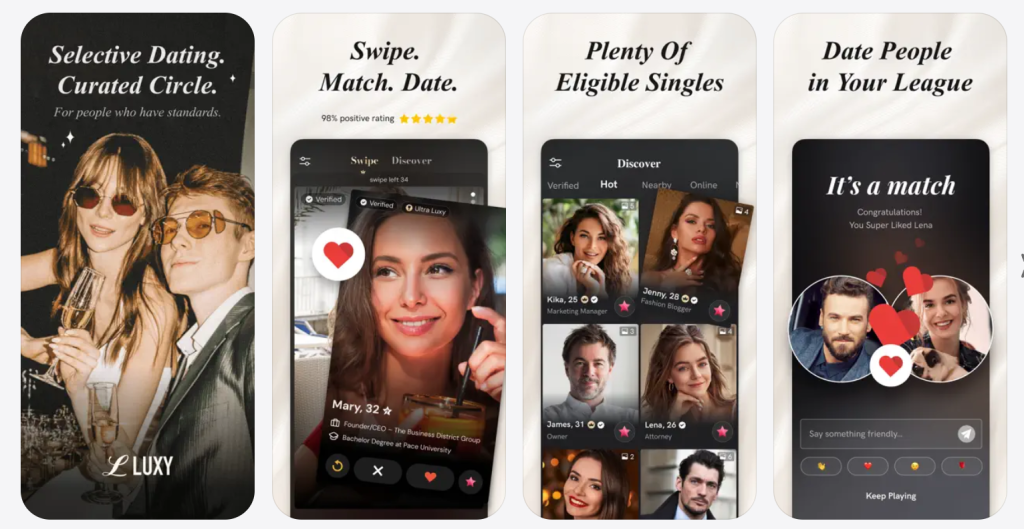
Luxy is a selective dating app aimed at users who want a more exclusive dating environment built around status, ambition, and high-end lifestyle appeal. Rather than presenting itself as a broad mainstream app for everyone, Luxy leans into the idea of connecting successful or attractive singles in a more curated space. That positioning is what gives the platform its identity and what makes it stand out in a crowded dating market.

That appeal is easy to understand. Many dating apps compete on volume, convenience, and low-friction access. Luxy goes in the opposite direction. It emphasizes selectivity, profile review, and premium upgrades, which means the app is trying to attract users who care as much about exclusivity and presentation as they do about simple match volume. For some people, that sounds aspirational. For others, it may feel overly filtered or image-driven. Either way, the app clearly knows the audience it wants.
Last Updated: March 2026
What Is Luxy?
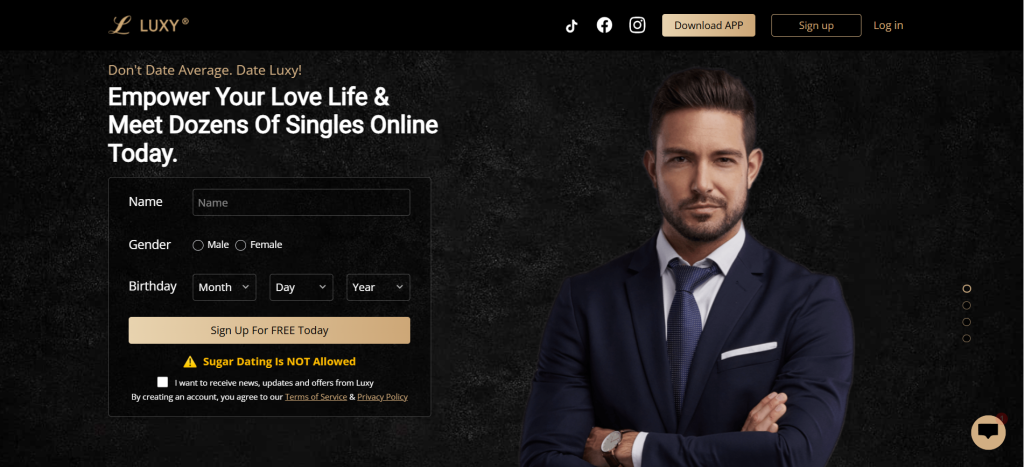
Luxy is a selective dating app that publicly describes itself as a place to meet high-quality people around the world. Official App Store descriptions present it as a community for users with high expectations and say that profiles are verified in real time to help keep the community safe and fun. In some app listing responses, Luxy also describes itself more bluntly as a dating app that serves successful or attractive members and says it maintains a high level of restriction through its approval process.
That matters because Luxy is not simply trying to be another swipe app with a premium price tag. Its branding revolves around exclusivity. The app is selling the idea that its community is narrower, more screened, and more elevated than the average mainstream dating pool. Whether a user finds that compelling or off-putting will depend heavily on what they want from online dating.
It also helps explain why Luxy gets grouped with so-called elite dating apps. The platform’s public language, review system, and premium memberships all point in the same direction: this is a status-conscious dating product, not a mass-market relationship app.
How This Luxy Review Was Evaluated
• Official platform positioning and how clearly Luxy describes itself as a selective, upscale dating app.
• Pricing transparency based on public App Store and Google Play subscription details.
• Safety and trust signals, especially real-time profile verification and the app’s controlled approval language.
• Free versus paid usability, including basic messaging on mutual matches and premium feature access.
• Overall value for users seeking a more curated or status-focused dating environment.
• How well Luxy compares with mainstream and niche elite-dating alternatives in terms of identity and access model.
How Luxy Works
Luxy does not appear to operate like a fully open mainstream app where anyone can instantly sign up and start browsing without much friction. Public listing language indicates that new applicants go through a review process, and some Luxy responses say every new applicant can use the app for free after passing review. That suggests an access model built around approval first, then usage.
Once inside, the basic version appears usable at a foundational level. Multiple public Luxy responses on App Store pages state that basic members can message matches based on mutual likes and that users can swipe profiles and converse at no extra cost. That is important because it shows the app is not completely locked behind payment from the first minute, even though it clearly encourages upgrades.
From there, Luxy pushes users toward premium layers. Google Play says Luxy offers multiple subscription options starting as low as $12.99 per month in addition to Luxy BLACK, while App Store listings reference Luxy BLACK, Luxy PLATINUM, Luxy Coins, Weekly Cards, and other paid extras. That suggests a layered monetization model built around subscriptions plus in-app purchases.
In practice, Luxy works like a filtered dating platform with a freemium core and a premium-heavy ceiling. Users can access basic matching and messaging after review, but the fuller experience is clearly tied to upgrades, visibility features, and status-enhancing options.
Key Features and Standout Tools
The first standout feature is the selective review process. Luxy repeatedly frames itself as a restricted or reviewed community rather than a universally open one. That matters because exclusivity is not just a marketing accessory here. It is part of the product design. The review process is meant to shape who gets in and how the app is perceived.
The second big feature is profile verification. Official App Store descriptions say profiles are verified in real time to help keep the community safe and fun. For any dating app, verification is useful. For a platform built around exclusivity and perceived user quality, it becomes even more central because trust and presentation are part of the brand promise.
Another standout area is Luxy’s premium ecosystem. Public listings reference Luxy BLACK and Luxy PLATINUM, as well as coins and other in-app purchases. That tells users the app goes beyond one simple paid plan. Instead, it appears to offer a tiered premium structure where users can pay for broader access, more visibility, or extra engagement features.
Basic access also seems more functional than some users might expect from an elite app. Luxy’s public responses say basic members can message mutual matches and use core matching tools for free. That is a meaningful plus because it lets users test the platform before deciding whether the premium layers actually offer enough value to justify paying.
Is Luxy Safe, Private, or Trustworthy?
Luxy appears to make a visible effort to position itself as safe and controlled. Its App Store description highlights real-time profile verification, which is one of the clearest official trust signals currently visible in public listing text. Verification does not eliminate risk, but it does suggest the app is trying to reduce fake profiles and improve confidence in the user base.
The selective review process also plays into trust. Because the platform is not presenting itself as fully open, it creates the impression of tighter community control. That may reduce some of the low-effort, chaotic feel that users often associate with fully open mass-market apps. However, controlled access should not be confused with guaranteed safety. Online dating always requires caution, no matter how polished the branding looks.
From a credibility standpoint, Luxy benefits from being visible across major app stores, having clear premium structures, and maintaining consistent positioning as a selective dating app. That makes it look more established than many vague “elite dating” clones. At the same time, users should still verify current privacy tools, reporting features, and moderation options inside the live app before trusting the platform too deeply. This last point is an inference based on the limited public safety detail available in surfaced listings.
Pricing, Payments, and Subscription Structure
Luxy’s pricing model is clearly premium-oriented, even though the app does allow some free use after approval. Google Play states that Luxy offers multiple subscription options starting as low as $12.99 per month in addition to Luxy BLACK. That already tells users the app expects monetization to be a central part of the experience.
Apple App Store listings also reveal more paid layers. One Luxy PRO listing says upgraded dating services start from $99.99, while another regional Luxy listing shows purchases such as Luxy BLACK, Luxy PLATINUM, Weekly Cards, and Luxy Coins, with prices varying by market. These listings make it clear that Luxy does not rely on one simple subscription. Instead, it appears to use multiple premium products and add-ons.
That structure has two implications. First, Luxy may feel flexible to users who like optional upgrades. Second, it may also feel expensive or fragmented to users who want pricing simplicity. A dating app with several premium tiers can create the impression that the best experience is always one more purchase away.
The good news is that Luxy’s own public responses repeatedly say the basic version is free and that basic members can message mutual matches. So while the app is clearly monetized, it is not accurate to describe it as unusable without payment. Users can at least test the community and the core matching flow before deciding whether a premium tier makes sense.
User Experience
Luxy’s user experience is shaped as much by identity as by interface. Even before a user begins matching, the app’s branding signals that it is meant to feel more selective, polished, and status-aware than a typical dating platform. That alone changes expectations. Users are not approaching Luxy as a casual free-for-all. They are approaching it as a reviewed and aspirational space.
Once inside, the experience seems to split into two layers. The first is the free core, where users can swipe, match, and message mutual likes. The second is the premium layer, where users get broader privileges, more access, and presumably more control over how actively they can pursue connections. That dual structure is common in dating apps, but on Luxy it feels especially tied to the brand’s luxury positioning.
The app is likely best suited to people who actively want a more exclusive dating environment. Someone who values high volume and fast open access may find Luxy too filtered or too premium. By contrast, someone who likes the idea of a more restricted community and is comfortable with layered paid options may find the app more appealing than mainstream alternatives.
Pros and Cons
Pros
Luxy has a very clear identity, which helps it stand out in a crowded dating market. It is not vague about being selective and status-oriented.
The platform offers real-time profile verification, which strengthens trust signals around authenticity.
Basic members appear able to swipe, match, and message mutual likes without paying, which makes the free layer more usable than some users may expect.
Luxy offers multiple subscription and premium options, which may appeal to users who want more control and extra features.
Cons
The app’s selective positioning may feel superficial, intimidating, or overly image-driven for some users. This is an inference based on Luxy’s branding and review-based access model.
Premium pricing appears layered and can get expensive depending on the membership tier or in-app purchases selected.
Because the app is niche by design, the available pool may be smaller than Tinder, Bumble, or Hinge in some markets. This is an inference based on category dynamics rather than a direct Luxy claim.
The public safety detail surfaced in listings is more limited than what some apps publish on dedicated safety pages, so users may need to inspect the live app for a fuller picture. This is an inference based on the currently surfaced public sources.
Luxy vs Alternatives
Compared with Tinder, Luxy offers less openness but more curation. Tinder wins on scale, speed, and instant access. Luxy wins on exclusivity, review-based entry, and upscale positioning. These are very different products aimed at very different mindsets.
Compared with Bumble or Hinge, Luxy still feels more gated and more status-conscious. Bumble and Hinge are broader and easier to access. Luxy is trying to create a narrower environment where presentation, exclusivity, and high expectations matter more. For some users, that will feel more refined. For others, it will simply feel more restrictive.
Against other elite-dating-style products, Luxy’s main strength is clarity. It does not pretend to be a mainstream dating app. It openly markets itself as a selective community for successful or attractive members and backs that with approval language, verification, and premium tiers. That makes its value proposition easy to understand, even if not everyone will like it.
Comparison Table: Luxy
| Platform | Best For | Free Version |
Moderation | Key Advantage |
|---|---|---|---|---|
| Luxy | Users who want a selective, upscale dating app | Basic free after review | Profile review, verification tools, and reporting systems | Exclusive positioning with verification and usable basic matching |
| Tinder | Users who want the largest open dating pool | Free + paid upgrades | Automated moderation with reporting and safety tools | Huge user base and instant access |
| Bumble | Users who want a structured mainstream dating app | Free + paid upgrades | Platform moderation and community reporting features | Broad reach with cleaner app culture |
| Hinge | Users who want deeper profiles and prompts | Free + paid upgrades | Profile moderation with reporting and safety checks | More profile context and conversation cues |
FAQs: Luxy
Is Luxy a free dating app?
Luxy’s public responses say the basic version is free after a user passes review, and that basic members can message matches based on mutual likes.
Does Luxy have a review or approval process?
Yes. Public Luxy listing responses say new applicants pass through a review process before using the app.
Who is it for?
Luxy publicly describes itself as a selective app for successful or attractive members and for users with high expectations.
Can basic users message people on Luxy?
Yes, based on public Luxy responses, basic members can message mutual matches.
Does Luxy verify profiles?
Yes. Official App Store descriptions say profiles are verified in real time.
What is Luxy BLACK?
Luxy BLACK appears to be one of the app’s premium membership tiers or subscription products listed in app stores.
Does Luxy have other paid products besides subscriptions?
Yes. Public App Store listings show products such as Luxy Coins and Weekly Cards in addition to Luxy BLACK and Luxy PLATINUM.
How much does Luxy cost?
Google Play says subscription options start as low as $12.99 per month, while Apple listings show additional premium items that vary by market.
Is it safe?
Luxy appears to have some useful trust signals, especially real-time profile verification, but users should still use normal online dating caution.
Is Luxy only for rich people?
The app clearly leans into status and upscale positioning, but its public language focuses on successful or attractive members rather than using only income-based wording.
Is Luxy better than Tinder?
That depends on the user. Someone who wants openness and scale may prefer Tinder, while someone who wants a more selective and premium-feeling environment may prefer Luxy.
Is it worth paying for?
That depends on how much value a user places on exclusivity, verification, and premium access. The free layer helps users test the app first, which is useful before paying.
Final Verdict: Luxy
Luxy stands out because it is very clear about what it wants to be. It is not trying to attract everyone, and it does not pretend to be a casual mainstream dating app. Instead, it sells a more exclusive environment built around status, selectivity, and upscale expectations. For users who find mass-market dating apps too chaotic, too broad, or too low-intent, that narrower positioning may be exactly the appeal.
It will not suit everyone. Some users will see the branding as polished and aspirational, while others will see it as too filtered or too premium-heavy. Still, Luxy’s real-time verification, review-based access, and usable free core give it more substance than many vague “elite dating” clones. For people who want a curated dating app that leans hard into exclusivity and premium identity, Luxy makes its case clearly. In the end, the strongest reason to try the platform is also the simplest: Luxy is built for people who do not want dating to feel ordinary.