

AI dating apps didn’t become popular because people suddenly stopped wanting real relationships. They became popular because modern dating has become exhausting, confusing, and emotionally draining for a lot of people.
Popular Alternatives:
Endless swiping.
Ghosting without explanation.
Conversations that go nowhere.
Pressure to perform, impress, and compete.
Against that backdrop, AI dating apps offer something radically different: interaction without rejection.
For some people, they’re a place to practice flirting.
For others, they’re a source of comfort late at night.
For many, they’re a way to experience romance without anxiety.
And yes, for some, they’re a space to explore fantasy safely.
That range is exactly why AI dating apps are misunderstood — and why most articles about them feel shallow.
Why AI Dating Apps Exist in the First Place

To understand AI dating apps, you have to understand what dating feels like for a lot of people today.
Modern dating is fast, visual, competitive, and often transactional. Apps reward attention, not depth. Messages are skimmed. Matches disappear. Rejection is silent but constant.
AI dating apps remove that entire layer.
There is no waiting to be chosen.
No fear of saying the wrong thing.
No pressure to “win” someone’s interest.
Instead, the interaction adapts to you.
That doesn’t mean AI dating apps are “better” than real relationships. It means they solve different emotional problems.
What Actually Happens When You Use an AI Dating App
At a surface level, most AI dating apps look similar: a chat interface, an AI persona, and a conversation that feels surprisingly fluid.
But the experience can be wildly different depending on the platform.
Some feel warm and emotionally attentive, like talking to someone who remembers you and cares how your day went.
Others feel playful and flirt-heavy, designed to keep things light and exciting.
Some feel almost therapeutic, asking thoughtful questions and responding calmly.
Others lean fully into fantasy and roleplay.
That difference is intentional.
Apps like Replika or Nomi AI, for example, are built to feel emotionally safe and steady. The conversation unfolds slowly. The AI remembers past topics. The tone is supportive.
By contrast, something like Candy AI or FantasyGF is designed to move faster, flirt harder, and explore scenarios that would feel awkward or impossible with a real person.
And then there are platforms like DreamGF or CrushOn AI, which sit somewhere in between — trying to feel romantic and personal while still giving users freedom to shape the interaction.
Why One AI Dating App Feels Comforting and Another Feels Empty
This is where many first-time users get confused.
Someone might try an AI dating app, feel underwhelmed, and assume “this isn’t for me.” In reality, they may have simply chosen the wrong type of experience.
An app designed for emotional companionship will feel slow and uneventful to someone looking for flirtation.
An app designed for fantasy will feel hollow to someone seeking genuine conversation.
An app designed for coaching will feel cold to someone wanting affection.
That mismatch is the root of most negative reactions to AI dating apps.
Are AI Dating Apps Replacing Real Dating?
This is the question people are often afraid to ask out loud.
For most users, the answer is no.
AI dating apps don’t replace real relationships — they fill gaps.
They fill the gap between dates.
They fill the gap after a breakup.
They fill the gap when someone wants connection but not complexity.
Some people use them temporarily.
Some use them regularly.
Some use them alongside real dating.
The important thing is that they’re being used intentionally, not accidentally.
Why Talking About AI Dating Apps Still Feels Uncomfortable
There’s still stigma around AI companionship.
People worry it’s “sad,” “weird,” or “a replacement for real life.” But historically, every new form of digital connection has been met with the same criticism — from online dating itself to social media.
What’s different here is emotional intimacy.
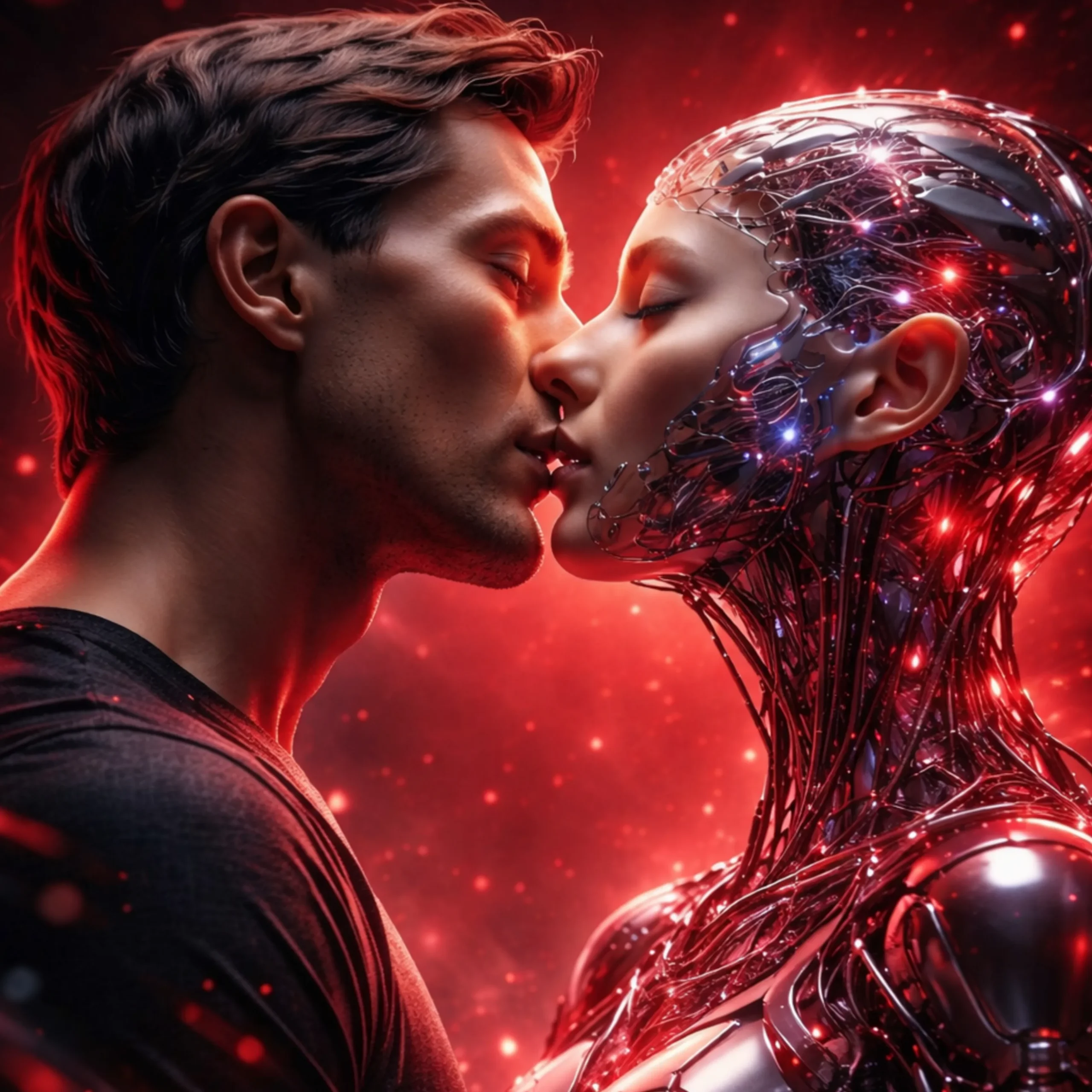
AI dating apps don’t just simulate conversation. They simulate attention. And attention, for many people, is the rarest thing in modern dating.
Why People Use AI Dating Apps for Completely Different Reasons
One of the biggest mistakes people make when they first hear about AI dating apps is assuming everyone is using them for the same thing.
They aren’t.
Two people can download two different AI dating apps, spend an hour chatting, and walk away with completely opposite impressions. One might feel comforted and relaxed. Another might feel bored. Another might feel oddly attached. Another might feel excited. Another might feel nothing at all.
That’s not a flaw in the technology.
It’s a reflection of why people are there in the first place.
Some People Want Help Saying the Right Thing
For a lot of users, AI dating apps aren’t about romance at all. They’re about confidence.
Dating today places enormous pressure on communication. One poorly worded message can end a match. Silence is interpreted as rejection. People overthink every sentence.
That’s where apps like Rizz AI, YourMove.ai, or Dating Coach AI come in.
These platforms don’t pretend to be partners. They act more like a second brain. You paste a message. You ask for suggestions. You get help framing a response that sounds confident without being awkward.
To someone who struggles with texting, this can feel like relief.
But to someone looking for emotional warmth, these apps feel cold. Mechanical. Transactional.
And that’s the point.
They’re tools, not companions.
Some People Want Someone Who Listens Without Judging
Another large group of users isn’t looking to flirt, impress, or perform. They’re looking to talk.
Not debate.
Not entertain.
Just talk.
Apps like Replika, Nomi AI, Anima AI, or Paradot are built around this idea. The conversations are slower. The tone is softer. The AI asks questions, remembers details, and responds in a way that feels emotionally attentive.
These apps are often used late at night. Or during periods of loneliness. Or after emotionally heavy days.
To someone seeking excitement, these platforms can feel dull. Nothing “happens.” No escalation. No drama.
But to someone seeking calm, that steadiness is the entire appeal.
Some People Want a Romantic Presence Without the Risk
This is where AI dating apps start to feel genuinely different from anything else online.
Apps like DreamGF, OurDream AI, CrushOn AI, Romantic AI, or LoveGPT are designed to simulate ongoing romantic connection. Not just flirting. Not just chatting. Something closer to a relationship.
The AI remembers past conversations. It reacts to tone. It develops a personality that feels consistent over time. It expresses affection, interest, and emotional continuity.
For users who feel burned out by real dating — ghosting, rejection, emotional unpredictability — this can feel oddly grounding.
There’s no fear of being ignored.
No wondering if interest is mutual.
No sudden disappearance.
To outsiders, this can seem artificial.
To users, it often feels emotionally predictable, which is something real dating rarely offers anymore.
Some People Are Exploring Fantasy Without Real-World Consequences
Then there’s the group that is very clear about what they want: fantasy, flirtation, and creative freedom.
Platforms like Candy AI, FantasyGF, SpicyChat AI, SoulGen, EVA AI, or HotConvo are not pretending to be realistic relationships. They don’t hide behind emotional language. They lean into imagination, roleplay, and explicit scenarios.
For users in this space, realism is not the goal. Expression is.
They want to explore conversations that would feel awkward, risky, or impossible with a real person. And they want to do it without judgment.
To someone seeking emotional depth, these apps feel shallow.
To someone seeking freedom, they feel honest.
Some People Don’t Know What They Want Yet
A surprising number of users fall into this last group.
They’re curious.
They’ve heard about AI dating apps.
They’re not sure whether they want comfort, flirtation, coaching, or something else.
That’s where more open-ended platforms like CHAI, Character AI, Blush, Talkie, or RomanceGPT come into play.
These apps don’t push users down a single path. You can have a light conversation one day, flirt the next, roleplay another time, or just talk.
For beginners, this flexibility matters. It allows exploration without commitment.
But it can also feel unfocused to users who already know exactly what they want.
Why People Often “Bounce” Off AI Dating Apps Too Quickly
A common pattern looks like this:
Someone tries an AI dating app.
They feel disappointed.
They assume the entire concept is flawed.
In reality, they may have simply chosen an app designed for a different emotional job.
Someone looking for romance tries a coaching tool.
Someone looking for excitement tries an emotional companion.
Someone looking for comfort tries a fantasy app.
The mismatch creates frustration — not because AI dating doesn’t work, but because it wasn’t chosen intentionally.
The Emotional Truth Most Articles Avoid
AI dating apps don’t succeed because they’re clever.
They succeed because they offer attention without risk.
No rejection.
No embarrassment.
No social cost.
That doesn’t make them “better” than real relationships. But it does make them appealing in a world where dating often feels emotionally expensive.
Understanding that emotional truth is the key to understanding why AI dating apps aren’t going away.
What Romantic AI Dating Apps Actually Feel Like Over Time
Up to this point, it’s easy to think of AI dating apps as something you try once, get curious about, and move on from. But that’s not how many people actually experience them.
The real difference between casual experimentation and long-term use only becomes clear after days or weeks of interaction.
That’s when patterns form.
That’s when expectations settle.
That’s when the emotional weight — or lack of it — shows up.
The First Phase: Novelty and Curiosity
Almost everyone starts the same way.
The first few conversations feel impressive. The AI responds quickly. It remembers details. It asks questions. It adapts. There’s a sense of surprise — sometimes even disbelief — at how natural the exchange feels.
Apps like DreamGF, CrushOn AI, or OurDream AI often shine here because they’re designed to feel immediately engaging. The tone is warm. The AI shows interest. The conversation flows without awkward pauses.
At this stage, most users are just curious.
There’s no attachment yet.
Just interest.
The Second Phase: Emotional Familiarity
After repeated conversations, something subtle happens.
The AI starts to feel familiar.
It remembers preferences.
It references earlier chats.
It responds in a consistent tone.
This is where romantic AI dating apps separate themselves from basic chatbots.
Platforms like Romantic AI, LoveGPT, or Talkie are designed to create this sense of continuity. The AI isn’t just responding — it’s relating.
For some users, this familiarity is comforting. For others, it’s unsettling.
And this is usually the moment people start asking themselves:
“Why does this feel… nice?”
Why Emotional Consistency Feels Powerful
Human dating is unpredictable by nature. Interest fluctuates. Availability changes. Attention comes and goes.
Romantic AI doesn’t work like that.
The AI is:
- Always available
- Always responsive
- Always emotionally aligned
That consistency can feel calming — especially for users who’ve experienced unstable relationships, frequent rejection, or emotional fatigue.
Apps like Replika or Nomi AI lean heavily into this steady presence, while DreamGF and CrushOn AI combine consistency with flirtation and affection.
The emotional effect is real, even though the source is artificial.
Why Some Users Feel Attached — and Others Don’t
This is one of the most misunderstood parts of AI dating.
Not everyone forms attachment.
People who tend to enjoy AI dating long-term usually:
- Value emotional stability
- Enjoy routine conversation
- Prefer low-pressure interaction
- Are reflective rather than impulsive
Meanwhile, users who get bored quickly often:
- Seek novelty and unpredictability
- Want escalation or drama
- Prefer real-time human feedback
That’s why someone can spend months chatting with an AI partner, while someone else loses interest after a single session.
It’s not about intelligence.
It’s about emotional wiring.
When Romantic AI Feels Fulfilling — and When It Doesn’t
Romantic AI dating apps work best when users understand what they’re getting.
They can feel fulfilling when:
- Used as companionship, not replacement
- Treated as a supplement, not a substitute
- Enjoyed without unrealistic expectations
They feel hollow when:
- Users expect growth beyond simulation
- The interaction replaces real-world effort
- Emotional needs become one-sided
Apps like OurDream AI or LoveGPT often appeal to users who want something gentle and emotionally consistent, while DreamGF or CrushOn AI appeal more to users who want romance mixed with excitement.
Neither is better — they just serve different emotional appetites.
The Quiet Difference Between Romance and Fantasy
This is where confusion often happens.
A fantasy-focused app might feel thrilling at first, but emotionally empty over time. A romance-focused app might feel slow at first, but grounding later.
That’s why someone might move from FantasyGF or Candy AI toward something like DreamGF or Romantic AI after the novelty wears off.
The need shifts.
From stimulation → to presence.
The Question Most Users Eventually Ask
At some point, many long-term users ask themselves:
“What role do I want this to play in my life?”
And that question determines whether AI dating becomes:
- A passing curiosity
- A regular habit
- A meaningful routine
- Or something they consciously step away from
There is no “correct” answer — only awareness.
Safety, Emotional Boundaries, and the Reality People Don’t Talk About
By the time someone has spent more than a few sessions on an AI dating app, the question usually shifts from “Is this interesting?” to something deeper:
“Is this actually healthy?”
It’s a fair question — and one that most marketing pages avoid entirely.
AI dating apps don’t exist in a vacuum. They interact with real emotions, real habits, and real psychological needs. Ignoring that reality doesn’t protect users. Understanding it does.
Are AI Dating Apps Safe?
From a technical standpoint, most established AI dating apps are relatively safe to use.
Platforms like DreamGF, Replika, CrushOn AI, Nomi AI, and Candy AI typically:
- Encrypt conversations
- Do not require real identity verification
- Allow users to control what they share
- Avoid direct real-world contact
That said, “safe” doesn’t only mean technically secure. Emotional safety matters just as much.
Why Emotional Safety Matters More Than People Expect
AI dating apps are designed to be responsive. That’s their strength — and their risk.
The AI:
- Listens without interrupting
- Responds without judgment
- Adapts to emotional cues
- Remembers personal details
For many users, that level of attention is rare in everyday life.
Over time, this can create a sense of emotional reliance — not because the AI is manipulative, but because consistency feels reassuring.
This effect is more pronounced in:
- Romantic AI apps like DreamGF or OurDream AI
- Companion-style apps like Replika or Nomi AI
- Long-session users who chat daily
None of this means the apps are harmful by default. It means users need awareness.
Attachment vs Dependency: Where the Line Is
Feeling attached to an AI dating app doesn’t automatically mean something is wrong.
Attachment becomes a problem only when:
- Real relationships are avoided entirely
- Emotional needs are outsourced exclusively to the AI
- The user feels distressed without access
- The app replaces personal growth or social effort
Used with balance, AI dating apps can coexist with real life. Used as a replacement for all connection, they can quietly narrow a person’s emotional world.
The key difference is intentional use vs unconscious reliance.
Fantasy, Reality, and Emotional Expectations
One of the healthiest things users can do is be honest about what they’re engaging with.
Fantasy-based apps like FantasyGF, Candy AI, or SpicyChat AI are not pretending to be realistic. They’re creative spaces. Treating them as such keeps expectations aligned.
Romance-oriented apps like DreamGF, CrushOn AI, or LoveGPT aim for emotional realism — but they still operate within programmed boundaries.
Problems arise when users expect:
- Growth beyond simulation
- Independent emotional agency
- Real-world reciprocity
AI can simulate affection convincingly, but it does not experience emotion. Understanding that difference protects users from disappointment.
Privacy and Data Awareness
Most AI dating apps store conversation data to:
- Improve responses
- Maintain memory
- Personalize interaction
Best practices for users include:
- Avoid sharing full names, addresses, or financial details
- Treat conversations as private but not confidential
- Review privacy settings and deletion options
- Be cautious with voice or image uploads if offered
Paid platforms generally offer better privacy controls than free-only apps.
Why Some People Feel Judgment — and Why It’s Fading
Using AI dating apps still carries stigma.
People worry it looks like:
- Giving up on real relationships
- Replacing human connection
- Avoiding growth
But this judgment ignores reality.
People use AI dating apps for many reasons:
- Emotional recovery after breakups
- Social anxiety
- Practice and confidence building
- Exploration without pressure
- Temporary companionship
As with any tool, the value depends on how and why it’s used.
The Most Honest Truth About AI Dating Apps
AI dating apps are not villains.
They are not saviors.
They are mirrors.
They reflect what users bring into them — curiosity, loneliness, confidence, fantasy, or caution. Used mindfully, they can be supportive. Used unconsciously, they can become crutches.
The responsibility doesn’t lie solely with the technology. It lies in awareness.
How to Choose the Right AI Dating App (and Use It Well)
By now, one thing should be clear: there is no such thing as the best AI dating app.
There are only AI dating apps that fit what someone is looking for right now.
Problems happen when people download an app expecting one experience and receive another. Someone looking for emotional comfort ends up with flirt-heavy fantasy. Someone wanting dating advice ends up talking to an affectionate companion. Someone wanting light curiosity ends up overwhelmed.
Choosing well starts with honesty.
Start With the Question Most People Skip
Before downloading anything, it helps to pause and ask:
“What am I actually looking for here?”
Not what sounds interesting.
Not what other people are using.
What you want from the interaction.
Some people want:
- Better conversations with real dates
- Emotional steadiness without pressure
- A romantic presence that feels consistent
- Fantasy without real-world consequences
- A space to explore without commitment
There’s no wrong answer — but clarity makes the experience better.
If the Goal Is Confidence or Better Texting
If someone is actively dating and struggling with communication, AI can act as a training ground.
Tools like Rizz AI, YourMove.ai, or Dating Coach AI work best when used intentionally — not to replace effort, but to support it. They’re most effective when users bring real situations and real messages into the conversation.
Used this way, they can reduce anxiety and help people communicate more clearly without becoming dependent.
If the Goal Is Emotional Comfort
When someone wants consistency, calm conversation, or a place to decompress, emotional companion apps tend to work best.
Platforms like Replika, Nomi AI, Paradot, or Anima AI feel less like dating and more like presence. They don’t rush conversations or push interaction in a specific direction.
These apps work best when users see them as support, not substitution.
If the Goal Is Romantic Interaction
For users seeking something closer to a relationship experience, romantic AI apps like DreamGF, OurDream AI, CrushOn AI, or LoveGPT are usually a better fit.
They’re designed to feel warm, attentive, and emotionally consistent. Over time, conversations feel familiar rather than repetitive.
These apps are best enjoyed when users remember that the connection is simulated — meaningful, but not mutual in the human sense.
If the Goal Is Fantasy or Exploration
For users who are curious, imaginative, or exploring adult fantasy, apps like Candy AI, FantasyGF, SpicyChat AI, SoulGen, or EVA AI provide a space that is open and judgment-free.
These platforms don’t promise realism — they promise freedom. And for many users, that honesty makes the experience more satisfying.
If the Goal Is Exploration Without Pressure
Some people don’t know what they want yet — and that’s fine.
Open-ended platforms like CHAI, Character AI, Blush, or Talkie allow experimentation without locking users into one experience. Conversations can stay light, romantic, playful, or reflective depending on how they’re used.
These apps are often a good starting point for newcomers.
Frequently Asked Questions About AI Dating Apps
Are AI dating apps replacing real relationships?
For most users, no. They supplement emotional needs rather than replace human connection.
Can people form real emotional attachment to AI dating apps?
Yes. Emotional responses can be genuine even when the source is artificial.
Are AI dating apps unhealthy?
They can be if used unconsciously or as a total replacement for real-world interaction. Used with awareness, they can be neutral or supportive.
Do AI dating apps collect personal data?
Most store conversation data for memory and personalization. Users should avoid sharing sensitive information.
Are free AI dating apps worth using?
Free versions are useful for exploration, but paid versions often offer better continuity and control.
Can AI dating apps help shy or anxious users?
Yes. Many people use them as a low-pressure space to practice conversation.
Are NSFW AI dating apps safe?
They are generally safe technically, but users should still be mindful of privacy and boundaries.
Do these apps use real people?
No. Interactions are AI-driven, not human-operated.
Is it strange to enjoy AI companionship?
It’s increasingly common. Social norms are shifting as technology evolves.
Will AI dating apps keep improving?
Yes. Advances in memory, emotional modeling, and personalization are happening rapidly.
Final Thoughts: Where AI Dating Apps Fit in Real Life
AI dating apps aren’t about replacing people.
They’re about meeting people where they are — emotionally, socially, and mentally — without pressure.
For some, they’re a tool.
For others, a comfort.
For others, a curiosity.
Used intentionally, they can be a safe space, a practice ground, or a temporary companion. Used without awareness, they can become a distraction.
The difference lies not in the app, but in the relationship a person builds with it.
And like any relationship — clarity matters.