
Mamba is a global dating app and site built for chatting, matching, and meeting new people across different countries. In simple terms, it is a mainstream dating platform that combines classic swipe-style discovery, direct messaging, and a large international user base. That broad reach is its biggest selling point. Instead of focusing on a tightly curated niche, Mamba positions itself as a high-volume dating app where users can meet people for casual chats, dating, or more serious relationships.
That immediately places it in a very different lane from slower, more selective platforms. Some dating apps try to win through exclusivity or “mindful” pacing. Mamba goes the other way. It leans into scale, activity, and access. For users who want a wide pool and quick interaction, that can feel exciting. For users who prefer a more filtered or premium-style dating environment, it may feel too broad.
Last Updated: February 2026
What Is Mamba?
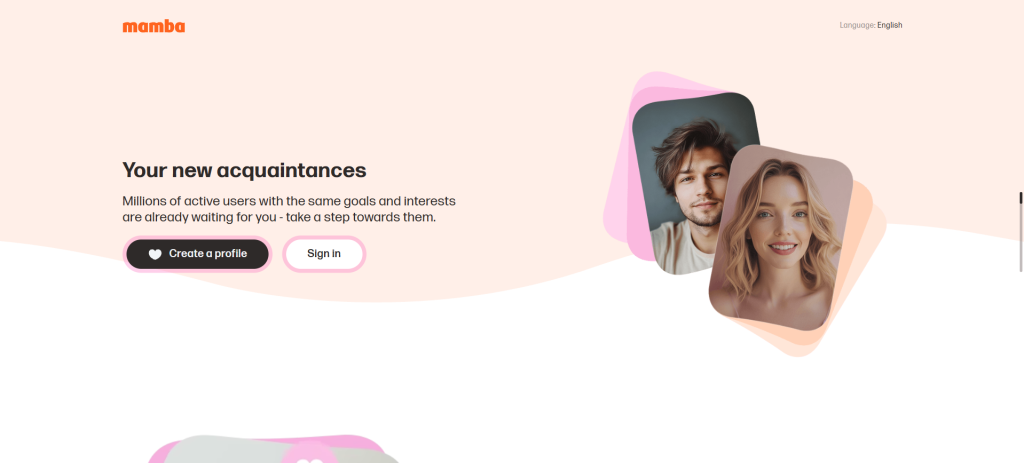
Mamba is a long-running online dating app and website designed to help people meet, chat, flirt, and build connections. It operates as a mainstream, open-access dating service rather than a narrow or highly curated platform.
In practical terms, it is best understood as a high-activity dating product. Users join, create profiles, browse others, swipe or interact, and start conversations. The platform’s identity is built around access and momentum. It is not selling scarcity. It is selling volume, reach, and the possibility of meeting someone quickly.
One of the clearest things about Mamba is that it presents itself as international. That matters because it shapes expectations right away. This is not just a local niche app. It is designed to connect people across multiple countries, which can make it more appealing for users who want broader dating options, friendships, or chat-based interaction beyond one city or region.
How This Mamba Review Was Evaluated:
- Clarity of the app’s core dating purpose
- Size and usefulness of its broad international reach
- Ease of sign-up, browsing, and starting conversations
- Pricing structure and the likely role of paid upgrades
- Trust, privacy, and general safety expectations
- Mobile usability and overall dating flow
- Practical value compared with other mainstream dating apps
This review focuses on how Mamba positions itself, what type of dating experience it appears to offer, where it may feel strongest, and where users should be more careful before committing time or money.
How Mamba Works
At its core, Mamba works like a mainstream dating app. A user creates a profile, adds photos, browses other users, swipes or shows interest, and starts chatting after mutual interest or through direct communication features.
That makes the platform easy to understand for anyone who has used modern dating apps before. There is no unusual concept to learn. It does not revolve around one match a day, waiting-room approval, or highly complex compatibility systems. The experience is built around fast discovery and active engagement.
Mamba also appears to allow a more direct, open style of interaction than some stricter match-first apps. That can make the platform feel livelier and faster. Users who like immediate movement may enjoy that. Users who prefer tighter controls and slower access may find it more chaotic.
Because the platform is broad and international, much of the experience depends on location, profile quality, and the type of people active at a given time. That is common with large dating apps. The system may be simple, but the quality of the experience depends heavily on who is actually using it in the user’s area or target region.
Key Features and Standout Tools
The biggest standout feature is scale. Mamba presents itself as a large international dating service, and that broad user reach is one of its strongest selling points. A large audience can improve the odds of finding chats, matches, and activity, especially for users who dislike apps that feel empty or too niche.
The second standout point is direct, mainstream dating flow. Mamba does not seem designed to slow things down. It is built around movement: browsing, matching, and chatting. That simplicity can be a real advantage for users who want a straightforward experience without too many branded twists.
Another notable feature is multi-purpose use. Mamba is not framed only as a serious-relationships platform. It also leans into chat, flirting, meeting new people, and casual interaction. That broader positioning gives it flexibility, but it also means user intentions may vary more than on highly relationship-focused apps.
There is also a VIP or premium-style upgrade layer. While the app can be approached as free to start, the stronger version of the experience appears to involve paid perks. That is typical for large dating apps, but it still matters because users should expect that visibility, extra tools, or convenience features may be tied to paid access.
Finally, Mamba also has a lite version in some app ecosystems, which suggests the brand is trying to make the service accessible to a wider range of users and devices. That reinforces its identity as a broad-access, mass-market dating service rather than a tightly controlled premium niche.
Is Mamba Private, Safe, Reliable, or Trustworthy?
Mamba appears to be a real, active, long-running dating platform with both a website and active mobile app presence. That alone gives it a level of legitimacy that random or poorly maintained dating apps often lack.
That said, no large open-access dating app should be treated as automatically safe. A broad platform with a large audience can offer more options, but it can also bring more noise, more mixed user intent, and a greater need for caution. Users should still avoid sharing sensitive information too quickly, be careful with off-platform requests, and verify people properly before meeting in person.
Because Mamba is positioned as a broad, high-activity platform, trust should be approached practically. The app may be established, but a large user base does not automatically mean a cleaner experience. In fact, the more open a dating app feels, the more important personal caution becomes.
The fair reading is this: Mamba appears legitimate and active, but the user experience will still depend on smart use, healthy skepticism, and normal dating-app safety habits.
Pricing, Payments, and Subscription Structure
Mamba can be approached as a free-to-start dating app, which makes it easy for new users to test the platform without a major upfront commitment. That helps reduce entry friction and fits the way large mainstream dating apps usually operate.
At the same time, the app clearly appears to include a paid layer. Premium or VIP-style access is part of the broader product model, which means users should assume that some convenience, visibility, or enhanced interaction features may be stronger on paid access than on the free version.
One practical point matters here: exact pricing can vary depending on country, device, app store, and promotional offers. That means the smartest approach is always to verify current in-app pricing before paying. This is especially important on large dating apps, where subscription options can come in multiple durations and feature bundles.
For users who just want to test the platform, the free entry point may be enough to gauge whether the local activity and user quality feel worthwhile. For users who plan to rely on the app heavily, the real question is whether the premium features genuinely improve results enough to justify the cost.
User Experience (Mobile, Desktop, Sign-Up, Setup, Ease of Use, etc.)
Mamba appears designed to be easy to access on both mobile and web, which gives it a broader usability profile than some dating apps that feel purely app-first. That can make it convenient for users who prefer flexibility across devices.
From a user-experience perspective, the biggest strength is familiarity. The interface model is built around the standard dating-app loop of browsing, matching, and messaging. That makes onboarding simple. Most users will understand the core flow quickly.
The upside of that simplicity is speed. Mamba is the kind of service that can feel active fast, especially if the user is in a region with strong platform activity. It does not seem built around deliberate pacing or heavy curation. It is built around getting people into the flow quickly.
The trade-off is that broad-access dating apps can feel less filtered. More activity can mean more opportunities, but it can also mean more inconsistent profile quality and more mixed intentions. For some users, that is worth it. For others, it weakens the overall experience.
In practical terms, Mamba is likely to suit users who want a mainstream, flexible dating experience with broad reach and less friction. It is less likely to suit people who want a highly curated, slow, or premium-feeling dating atmosphere.
Pros and Cons
Pros
- Large, international dating reach
- Straightforward browsing and chat-based dating flow
- Free-to-start access makes testing easy
- Flexible use for chat, dating, and meeting new people
- Available across mobile and web-style access points
Cons
- Broad-access model may feel less filtered
- User intentions may vary widely across the platform
- Premium features likely matter for the strongest experience
- Quality can depend heavily on location and active users
- Less ideal for users who want a highly curated dating space
Mamba vs Alternatives
Mamba competes best as a large, mainstream dating platform. Its biggest edge is not exclusivity or deep niche positioning. It is reach. It gives users access to a broad dating pool and a familiar, quick-moving way to connect.
Compared with Tinder, Mamba feels similar in its mainstream energy, though the exact community feel may differ by country and audience. Compared with Hinge, Mamba is likely to feel broader and less profile-depth focused. Compared with Inner Circle, it is far less selective and far more open. Compared with Once, it is much faster and more volume-driven.
That means Mamba is strongest for users who want access, activity, and flexibility. It is weaker for users who want strict filtering, slower pacing, or a more premium-curated atmosphere.
Comparison Table: Mamba vs Other Platforms
| Platform | Best For | Pricing / Free Version |
Key Advantage | Main Drawback |
|---|---|---|---|---|
| Mamba | Users who want a large, open dating pool | Free to start; paid upgrades likely apply | Broad international reach and active dating flow | Less filtered and more mixed in user intent |
| Tinder | Fast mainstream matching | Free version with paid upgrades | Huge user base and quick discovery | Can feel repetitive and crowded |
| Hinge | Users who want deeper profile interaction | Free version with paid upgrades | More prompt-led, conversation-friendly profiles | Less broad in feel than high-volume apps |
| Inner Circle | Users who want a curated dating environment | Free to start; stronger value tied to paid access | More selective and premium-feeling | Can feel restrictive or status-driven |
| Once | Users who want slower, mindful dating | Free to start; paid access may apply | Less swipe fatigue and more deliberate pacing | Too slow for users who want quick momentum |
The comparison makes the positioning clear. Mamba is built for people who want range and movement, not tight curation. Whether that feels powerful or messy depends on what the user values most.
FAQs: Mamba
Is Mamba a real dating app?
Yes. Mamba appears to be a legitimate, active dating platform with both web and mobile presence.
Is Mamba free to use?
It is free to start, but users should expect some form of premium or VIP-style paid upgrade within the broader experience.
What is Mamba best known for?
It is best known as a large, mainstream dating service with broad international reach and a chat-friendly dating flow.
Is Mamba for serious relationships only?
No. It appears to support multiple user goals, including chatting, flirting, casual dating, and more serious connections.
Does Mamba have a large user base?
Yes. Its branding strongly emphasizes scale and international activity.
Is Mamba better than Tinder?
That depends on preference. Mamba may appeal more to users who want its specific audience and international reach, while Tinder remains more universally familiar.
Is Mamba good for casual dating?
It can be, since the platform appears broad and flexible rather than strictly relationship-only.
Does Mamba work on mobile?
Yes. It has an active mobile app presence.
Can Mamba be used on desktop?
Yes. It also has a web-based presence, which adds flexibility.
Is Mamba safe?
It appears to be legitimate, but users should still use standard dating-app safety practices.
Does Mamba have paid features?
Yes. The platform appears to include premium or VIP-style paid access.
Should users verify pricing before paying?
Yes. Exact pricing can vary, so current in-app pricing should always be checked directly before subscribing.
Who is Mamba best for?
It is best for users who want a broad, active dating platform with a straightforward mainstream feel.
Is Mamba good for people who want a curated dating app?
Not necessarily. Users looking for a more filtered or exclusive dating environment may prefer a different type of platform.
Final Verdict: Mamba
Mamba is a strong mainstream dating option for users who want broad reach, fast interaction, and a more open dating environment. Its biggest strength is scale. It offers a large-pool, flexible experience that can feel more active than smaller or more tightly filtered platforms.
That same openness, however, is also its biggest trade-off. A wide audience can create more opportunity, but it can also create more inconsistency in profile quality, user intent, and overall experience. The platform is likely to work best for users who value access and momentum more than curation and exclusivity.
For that reason, Mamba remains a relevant choice for people who want a straightforward, large-scale dating app rather than a niche or ultra-premium alternative. It will not suit every dating style, but for users who prefer scale, activity, and flexibility, Mamba can still be a practical option.