


Monkey is built for quick, real-time video conversations with strangers—no long profiles, no endless swiping, just instant 1v1 social moments when someone wants to talk.
Last Updated: January 2026
How This Monkey App Was Evaluated
This review was evaluated using practical criteria that matter in real usage:
- Moderation strength
- Privacy/anonymity controls
- Pricing transparency
- Ease of use (mobile/desktop)
- Bot/spam prevention
- Filtering options (gender/location where relevant)
- Overall user safety
What Monkey App Is

This platform sits in the “random video chat” category, which means it focuses on spontaneous face-to-face conversations rather than curated dating or social networking. The core promise is simple: tap in, get matched, and see where the conversation goes.
It’s designed for people who want low-pressure social interaction. Sometimes the chat is funny. Sometimes it’s awkward. Sometimes it turns into a surprisingly thoughtful conversation. That unpredictability is the point.
It’s also worth being clear about what it is not. It isn’t a traditional dating app with detailed bios and careful matching logic. It isn’t a long-form messaging platform where people build relationships over days inside one inbox. It’s live, fast, and moment-driven.
Quick answer: This type of app is best for users who want instant social contact and don’t mind skipping quickly until they find a good vibe. It is not ideal for anyone who needs guaranteed predictability, strict identity verification, or slow-paced connection building.
How Monkey Works
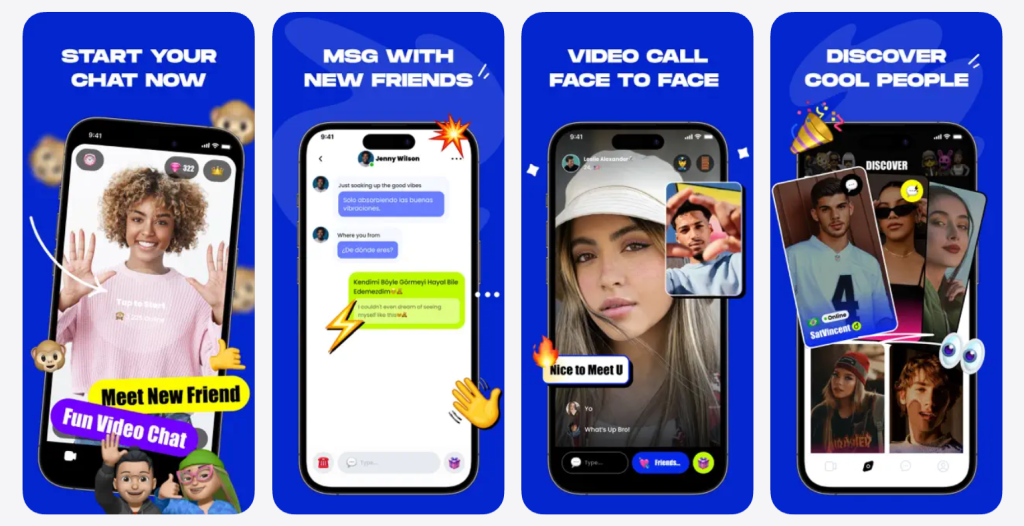
The experience is built around speed and simplicity. A typical session follows a pattern like this:
- Open the app or site and allow camera/mic permissions.
- Start matching and get paired with a random person in a 1v1 chat.
- Talk or skip depending on comfort and vibe.
- Repeat until a good conversation happens or the session ends.
This kind of platform relies on a few “invisible” fundamentals:
- fast connection time
- stable video/audio
- easy skip/exit flow
- clear reporting tools
- enough active users to keep matches fresh
If any of those break, the whole experience collapses. When they work, the platform feels effortless.
Key Features and Standout Tools of Monkey App
Most apps in this niche win or lose on control and flow, not flashy extras. The most valuable tools are the ones that keep users comfortable while staying fast.
1v1 random matching
The defining feature is immediate pairing with another person. It’s the simplest format, and it creates high energy quickly.
Fast skip/next
Skipping is a normal part of random video chat culture. A good design makes skipping instant, because it’s both a convenience feature and a safety feature.
Reporting and blocking
Reporting should be available during a live chat, not buried in menus. Blocking should be obvious and permanent enough to feel meaningful.
Safety-oriented friction (when needed)
A platform can reduce bad behavior by adding smart friction—prompts, restrictions, or access limits that discourage rule-breakers without ruining the experience for normal users.
Mobile-first simplicity
This category performs best when users can start chatting in seconds, without feeling like they’re entering a complicated setup process. The best video chat apps make this mobile-first flow feel quick without hiding safety controls.
Quick answer: The best features in random video chat aren’t “fun” features—they’re control features. Skip speed, report visibility, and clean onboarding determine whether the platform feels enjoyable or stressful.
Anonymity and Privacy: What “Anonymous” Really Means
Random video chat often feels anonymous because the experience is temporary and users don’t always need full identity profiles to start. But video changes the meaning of anonymity.
In practical terms, privacy depends on what a user shows and shares:
- A face is a form of identity.
- A voice is a form of identity.
- A background can reveal location cues.
- Oversharing creates risk quickly.
Even if a platform doesn’t display a full name, anonymity is never absolute in live video chat. The smartest approach is to treat every call like it could be observed or recorded and behave accordingly.
Here are the privacy habits that reduce risk the most:
- avoid sharing real names, phone numbers, and social handles
- don’t show documents, street views, or workplace/school items
- keep the camera angle neutral and background simple
- leave immediately when anything feels off
Safety, Moderation, and Community Behavior
Safety in random video chat is a combination of three things:
- the platform’s rules
- the platform’s enforcement
- the user’s boundaries
Rules alone don’t keep anyone safe. Enforcement does.
A platform feels safer when:
- reporting is fast and easy to find
- repeat offenders disappear quickly
- the experience isn’t dominated by bots or explicit behavior
- “bad sessions” are occasional, not constant
A platform feels riskier when:
- harmful behavior appears frequently
- reporting feels pointless
- there’s heavy spam or obvious scripted accounts
- users struggle to exit or block effectively
No random video chat platform is perfect. But a strong one makes users feel like they have control, and it actively reduces repeat abuse through enforcement patterns that users can actually feel during normal use.
Quick answer: In this niche, “safe” doesn’t mean “nothing bad ever happens.” It means the app makes it easy to leave, easy to report, and difficult for repeat offenders to keep returning.
Pricing, Payments, and Subscription Structure
Many platforms in this space use a freemium approach:
- basic access is free
- key controls or upgrades are paid
- premium tiers improve convenience more than they guarantee quality
The paid features commonly fall into these buckets:
- stronger filtering or preference controls
- match priority or faster access
- reduced interruptions or higher limits
- premium modes that feel more curated
A good pricing system is transparent. A bad one creates surprise friction:
- unclear renewals
- confusing tiers
- pay prompts that appear mid-flow in ways that feel manipulative
A user doesn’t need premium to try the platform, but premium can matter for users who want more control over the randomness. That said, paid features rarely guarantee “better people.” They mostly guarantee better tools.
User Experience: Mobile, Desktop, and Sign-Up
This is where the platform often separates itself from competitors.
Mobile experience
Mobile is the natural home for random video chat. It’s fast, casual, and “in the moment.” But mobile also creates accidental privacy risk: shaky camera, changing backgrounds, and the temptation to use it anywhere.
A strong mobile experience has:
- fast loading
- stable video
- obvious mute/camera controls
- a clear exit and report workflow
Desktop experience
Desktop usually feels more controlled: fixed camera angle, more stable audio setups, easier multitasking, and less accidental oversharing. If the platform supports desktop cleanly, it’s often a better choice for users who want calmer sessions.
Sign-up friction
Some platforms allow instant entry. Others require lightweight sign-up. In this niche, the best sign-up system is the one that:
- keeps onboarding short
- explains permissions clearly
- doesn’t ask for unnecessary personal details
- makes users feel informed rather than pressured
Monkey: Pros and Cons
Pros
- Fast access to 1v1 random video chat
- Low-pressure social interaction without profiles
- Easy to skip and move on when the vibe is wrong
- Works well for casual conversation and quick connection
Cons
- Community quality can vary by time and region
- Random matching can produce inconsistent experiences
- Spam and bots can appear, especially during peak traffic
- Safety depends heavily on enforcement and user boundaries
Alternatives and When They Make More Sense
No single platform wins for everyone. The right choice depends on what a user wants to change about the experience.
Here are strong alternatives that cover different needs:
- OmeTV — Often chosen for large traffic and quick matching.
- Chatroulette — A classic roulette-style experience many users recognize.
- Camgo — Typically preferred for simple entry and clean flow.
- Chatrandom — Useful for users who like more modes and options.
- Emerald Chat — Often better for users who want more structure and less chaos.
- Shagle — Common pick for users who prioritize switching and basic filters.
- CooMeet — Often positioned as more curated, but can be more paywalled.
- Monkey App — Popular for a social, mobile-first vibe.
How to choose quickly
- If the experience feels too chaotic, pick something more structured.
- If spam is the problem, pick something with stronger community enforcement.
- If paywalls ruin the flow, pick something with a more usable free tier.
- If the vibe is too serious, pick something more casual and fast.
Comparison Table
| Platform | Best For | Free Version | Moderation | Key Advantage |
|---|---|---|---|---|
| Monkey App | Mobile-first social video chat | Yes (limited) | Medium | Fast, casual vibe |
| OmeTV | Quick matches with big traffic | Yes (limited) | Medium | Large user base |
| Chatroulette | Classic roulette format | Limited | Medium | Familiar experience |
| Camgo | Simple onboarding | Yes (limited) | Medium | Easy entry |
| Chatrandom | Multiple chat modes | Limited | Medium | More ways to chat |
| Emerald Chat | More structure | Yes (limited) | Medium-Strong | Less chaotic feel |
| Shagle | Switching + basic filters | Limited | Medium | Quick matching flow |
| CooMeet | More curated matching | Limited | Medium-Strong | Cleaner matching style |
FAQs on Monkey
What is the Monkey app used for?
It’s used for quick, real-time 1v1 video chats with strangers. The main goal is spontaneous conversation, not long-term messaging or profile-based matching.
Is Monkey app safe for first-time users?
It can be safe for first-time users who keep strict boundaries, avoid oversharing, and leave quickly when anything feels uncomfortable. The safest approach is to treat every chat as public.
Can users talk to strangers without sharing personal details?
Yes. Most conversations can stay casual without revealing identifying information. Privacy depends more on what the user shares than on what the platform asks.
Does Monkey require an account to get started?
Some random video chat platforms allow instant entry while others use lightweight sign-up. If the app requests more personal information than expected, it’s smart to stop and reassess.
Is it available on mobile and desktop?
Many users access this style of platform primarily on mobile, but some options also work on desktop. Desktop typically offers more control and fewer accidental privacy mistakes.
Why do chats end so quickly sometimes?
Skipping is normal in random video chat. Many users move fast until they find the right vibe, so short chats are part of the culture, not necessarily a negative signal.
Are bots and spam common on random video chat platforms?
They can be, depending on traffic and enforcement. If messages feel scripted, repetitive, or link-focused, it’s best to skip immediately.
How can users reduce the chance of bad interactions?
Use quick exits, don’t engage with boundary-pushers, keep the camera background neutral, and report repeat violations. The fastest safety tool is leaving early.
Can video chats be recorded?
Yes, screen recording is possible on most devices. Users should assume anything shown on camera could be saved and behave accordingly.
What should never be shared during a live chat?
Real name, phone number, home address, school/work details, social media handles, and live location should be avoided. Anything that can be used to track someone offline is a risk.
Is the experience better at certain times of day?
Often yes. Traffic changes throughout the day, and the mix of users can shift. If the experience feels low quality, trying a different time can make a noticeable difference.
Does paying improve the experience?
Paid features usually improve control and convenience rather than guaranteeing better conversations. Premium can reduce friction, but it cannot control who shows up.
What should someone do if they feel unsafe during a chat?
Exit immediately, then use report/block tools if available. In live video chat, leaving fast is the safest move.
Is it a good Omegle alternative?
It can be, depending on what the user liked about Omegle. People who want fast 1v1 conversation and quick switching often look for similar apps in this category. Omegla is another service people may compare when they want the same quick-switching format.
Final Verdict: Monkey
This platform works best for people who want casual, real-time 1v1 conversations and don’t mind skipping quickly to find the right vibe, but it only stays enjoyable when users keep strict privacy habits, use the safety tools aggressively, and treat every session as temporary—because that’s how Monkey delivers the most value without turning randomness into regret, and that’s the smartest way to use Monkey.